
Medevac Flight Coordination: How to Move a Patient Across Africa or the Gulf in Under 12 Hours
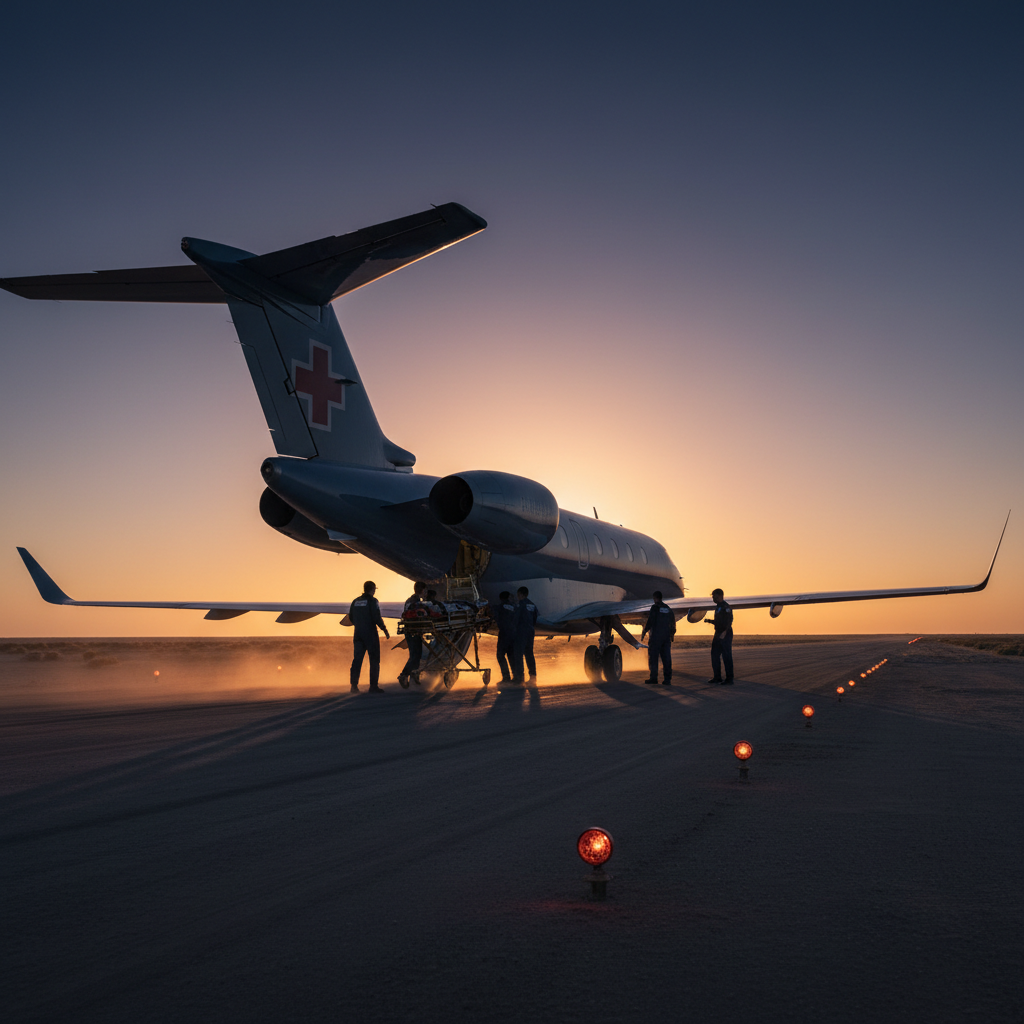
Medical evacuation is operations under stopwatch. The patient's clinical clock and the aircraft's operational clock have to be synchronized — this is how we do it.
Medevac is a coordination problem, not a transport problem
Most medevac providers can put a King Air or a Learjet on the ramp. What separates a good medevac from a bad one is the speed of the coordination chain around it: permits, slots, customs, ambulance transfer, and onward handover at the destination hospital.
The standard timeline
From first call to wheels-up, a well-run medevac runs:
- T+0:00 — call received, patient triage starts, aircraft and crew alerted.
- T+0:30 — flight plan drafted, permits filed (urgent flag), receiving hospital confirmed.
- T+1:30 — crew at airport, aircraft prepared, customs notified.
- T+2:30 — typically airborne for short-haul, T+4:00 for long-haul with overflight permits.
For an Africa-to-Europe medevac, a typical end-to-end timeline is 10–12 hours: ground ambulance to airport, flight time, ground ambulance at destination.
Permits under medevac flag
Nearly every African and Middle Eastern CAA has a medevac fast-track:
- Saudi Arabia (GACA): 2 hours typical.
- Egypt (ECAA): 4 hours typical.
- Sudan (CAA): 6 hours typical.
- Ethiopia (ECAA): 2 hours typical.
- UAE (GCAA): under 1 hour.
LFS holds direct medevac contact numbers with each CAA and uses a standard medevac coversheet that triggers the fast-track.
Ground ambulance and hospital coordination
The aircraft is rarely the bottleneck. Common failure modes:
- Ambulance routed to wrong terminal.
- Receiving hospital not pre-notified.
- Patient documents (passport, visa, medical clearance) missing.
- Family arrangements not coordinated.
LFS coordinates ground transport at both ends through a vetted network and provides a single dispatcher who stays on the line from first call through hospital handover.
Aircraft selection
- Short-haul (under 4 hrs): King Air 350, Citation CJ, Learjet 45.
- Medium-haul (4–7 hrs): Hawker 800/900, Citation Sovereign.
- Long-haul (7+ hrs): Gulfstream G450/G550, Global 6000, Challenger 605.
Medical configuration ranges from basic O2 + monitor to full ICU with ventilator. LFS partners with EURAMI-accredited providers across the region.
Operator FAQs
How fast can you get airborne for a medevac?
Best case 90 minutes from first call to wheels-up if aircraft and crew are pre-positioned. Realistic 2–4 hours for most situations including permits and customs.
Who pays for medevac flights?
Typically insurance (specialist medevac insurance, travel insurance with medevac rider, or corporate policy). LFS works with all major medevac insurers and can also operate on direct corporate or family pay.
Do you handle organ transport?
Yes — organ-only flights run under the same medevac protocol with even faster turn-around. Time-to-organ is the critical metric and we design the flight backwards from the surgical window.
LFS handles your operation 24/7.
Send the trip — we acknowledge in under 60 minutes during working hours, immediately for AOG.