
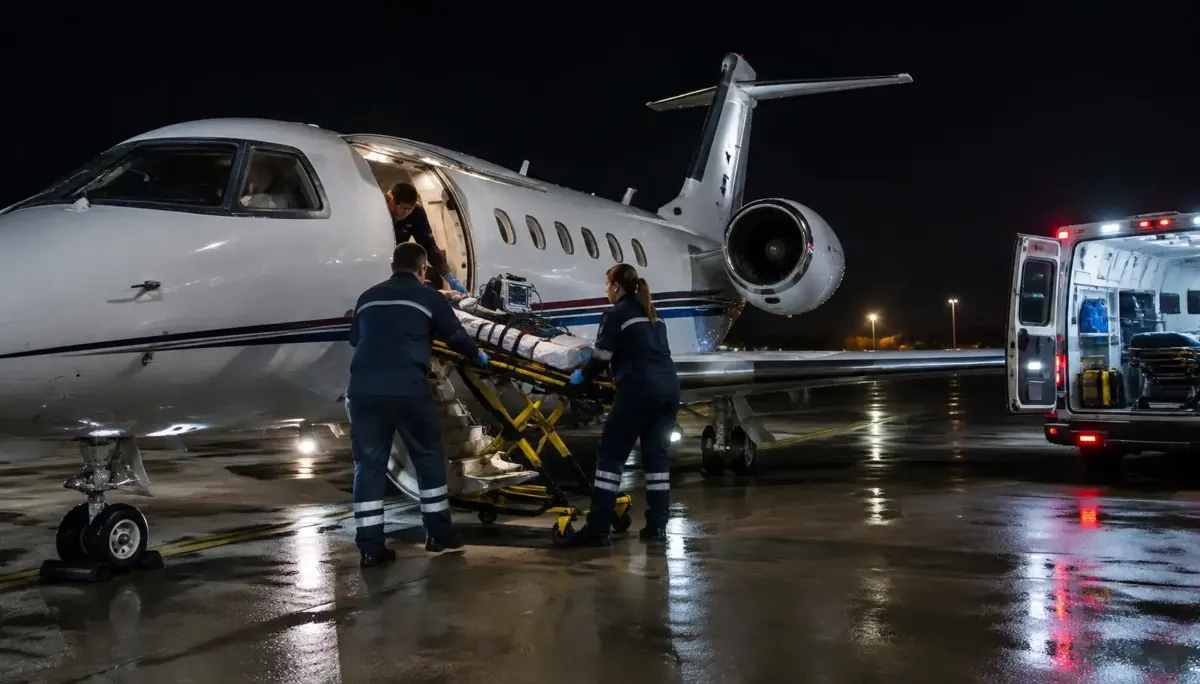
What a medical evacuation jet charter involves
Medical evacuation and medical repatriation describe different reasons for a patient movement, not a single aircraft product. An urgent evacuation may move someone to a suitable treatment facility; a planned repatriation may return a patient home for continued care. Inter-hospital transfers can be local, regional or international. The medical provider determines whether travel is clinically appropriate and what care is needed during the journey.
An aircraft used for a medical mission must be suitable for the operator's approved operation and the particular transfer. The words private jet or air ambulance do not by themselves establish a stretcher installation, onboard equipment, a medical team or a level of clinical care. Those details need written confirmation from the responsible aircraft and medical providers before a booking is treated as suitable.
LFS does not operate air ambulance aircraft or provide clinical services. Charter and aircraft sourcing enquiries are handled separately by the relevant provider; this guide concerns the trip-support work around the flight. For an aircraft already identified for a regional mission, use our Middle East medevac flight support page for operational coordination details.
Define responsibility before agreeing the itinerary
A workable mission plan identifies who is responsible for each handoff. The air operator confirms aircraft suitability, operating permissions and flight acceptance. The clinical team decides fitness to fly, equipment and medical staffing. The assistance company or commissioning party coordinates the wider case and funding arrangements. The receiving facility confirms its own acceptance arrangements. Ground ambulance providers manage the transfers they have accepted.
Trip support helps connect these parties through a shared schedule and confirmed airport services. It does not replace medical assessment, hospital admission decisions or the operator's operational control. Where requirements conflict, such as a requested departure time and a crew-duty limitation, the responsible teams must resolve them before the itinerary is considered executable.
Information needed to scope a medical flight
Begin with the route, preferred departure window in UTC, aircraft type and registration if available, operating company and the commissioning contact. Identify whether the request is an urgent medical evacuation, a planned repatriation or another patient transfer. Give the number of medical staff, escorts and other passengers so handling and border-document requirements can be reviewed.
Describe operational requirements rather than sending a full clinical record through a general enquiry form. Examples include stretcher-loading needs, medical equipment dimensions and weights, ground power requirements, ambulance access, or a cabin-pressure request already specified by the operator and clinical team. If an authority needs supporting medical documentation, agree an appropriate exchange method and recipient with the responsible team.
A proposed departure is not a confirmed slot, permit or aircraft booking. Ask which information remains outstanding, who will obtain it and what might change the schedule. Keeping one version of the route and passenger numbers reduces the risk of a permit application, handler booking and ambulance instruction referring to different plans.
- Origin, destination, alternates and any proposed technical stops.
- UTC timings, aircraft registration and operator identity.
- Crew, medical staff and escort counts; entry-document needs.
- Operational equipment and loading requirements approved by the operator.
- Contacts for the assistance company and accepted ground transfers.
Flight dispatch and route planning
Medical missions can change at short notice, but the flight still needs a plan based on aircraft performance, weather, NOTAMs, available airspace and airport conditions. The air operator and commander retain the final decisions on flight safety and acceptance. A clinical request affecting altitude or cabin pressure must be evaluated against the aircraft's actual capabilities and the operator's procedures; a dispatch service cannot promise that every request is achievable.
LFS can coordinate flight planning and operational briefing support around the proposed mission. Before fixing a route, identify alternatives if an airport is closed, a permit is unavailable or weather changes. The preferred medical destination may not be the best aviation alternate, and a diversion also changes the ground transfer plan. The relevant teams should understand both consequences.
Overflight permits, landing permissions and priority status
Permit requirements vary with the country, aircraft registry, operator, route and flight purpose. A medical mission is not automatically exempt from normal documentation or border requirements. Authorities may have procedures for urgent air ambulance operations, but the applicable process and supporting evidence must be checked for the specific flight. Priority handling is a request, not a guaranteed approval time.
Use consistent aircraft details, operator documents, route and UTC timings across applications. An amended destination, registration or schedule may require a new clearance or an amendment under the authority's rules. Our overflight permits and urgent flight permits pages explain the support scope. A flight-plan status indicator does not substitute for a landing permission, slot or required operating authorisation.
For covered European commercial operations, EASA TCO safety authorisation and national operating permits are distinct matters. Qualifying urgent air ambulance flights may have a conditional one-off notification pathway; it is not a universal medical-flight waiver. Operators should consult the current EASA guidance and the relevant state's requirements.
Ground handling, patient transfer and equipment
The ground plan should specify stand access, loading method, ground power, passenger processing and where a road ambulance may meet the aircraft. Ambulance apron access depends on airport security procedures and written arrangements with the handler and authority. If airside access is not available, the operator and medical providers need to agree a workable alternative rather than assume an aircraft-door transfer.
Medical equipment can introduce aviation handling constraints. Batteries, oxygen cylinders and some supplies may be subject to dangerous-goods provisions, operator acceptance and local requirements. The clinical team and operator should confirm the equipment configuration, documentation and any restrictions; a general declaration that equipment is medical does not remove those checks. LFS coordinates the requested ground handling arrangements but does not certify medical equipment or approve its carriage.
Fuel uplifts and technical stops for long-range transfers
A technical stop is more than a refuelling point. Review airport hours, handling acceptance, fuel grade and uplift availability, border formalities, parking and whether the patient remains aboard under the operator's procedures. Ground power, access and crew changes may also matter. A published airport listing is not confirmation that all required services will be available at the intended time.
LFS can request aviation fuel arrangements and align handling orders with the flight schedule. Ask for the confirmed commercial terms and any limitations before accepting a stop. Short ground time may be desirable, but no minimum turnaround can be promised independently of local conditions, operator procedures and the actual service confirmations.
Crew, medical staff and border logistics
Flight-deck crew, medical staff and accompanying relatives may have different entry or transit requirements. Provide the correct counts and documents through the agreed process. Accommodation and transport must fit the accepted duty and rest plan; arranging a hotel does not extend an operator's duty limits or make an unavailable crew legal to fly.
For a crew swap, clarify who is arriving, which airport they will use, when they can reach the aircraft and whether local entry permission is needed. Our crew logistics service supports hotel and transport arrangements. For organisations operating managed aircraft on occasional medical missions, managed-fleet trip support explains the recurring operational relationship.
Compare a proposed support scope, not an unsupported promise
A useful enquiry separates aircraft and clinical services from aviation coordination. Ask which party supplies each service, what has been confirmed, what remains an estimate and which cancellation or amendment terms apply. Permit charges, handling, fuel, parking and crew costs are different items. Their availability and treatment should be understood rather than hidden behind a single claim of seamless bed-to-bed service.
Send LFS the route, aircraft details, UTC schedule and required aviation services through the existing request flow. If the aircraft or clinical provider has not yet been chosen, say so. The desk can review the trip-support requirement without representing that an aircraft, medical team or hospital place has been reserved. All permissions and access remain subject to the responsible authorities.
Frequently asked questions
Does LFS supply an air ambulance or medical team?
No. LFS provides aviation trip support. The responsible aircraft provider and medical organisation must confirm aircraft availability, clinical staffing, equipment and suitability separately.
Is a medical repatriation always an emergency flight?
No. Repatriation can be planned, while an evacuation may be urgent. The clinical team determines suitability and urgency; the operator and authorities determine the applicable aviation requirements.
Can a medevac status guarantee permit approval?
No. Priority status and supporting evidence may be relevant, but each authority decides the applicable process and approval. A status indicator does not replace required permissions.
Should I send a patient diagnosis through the enquiry form?
Keep the initial enquiry to necessary operational information. If an authority requires medical documentation, coordinate the appropriate recipient and exchange process with your clinical or assistance provider.
Can an ambulance meet the aircraft on the apron?
Only where the airport and relevant security arrangements permit it. The handler must confirm access and the transfer plan for the flight; it must not be assumed from a previous visit.
Reference sources
Reviewed 19 October 2026. Current authority requirements, operator procedures and written service confirmations govern each flight.