
Flying Around Russia: Asia–Europe Routing Options in 2026
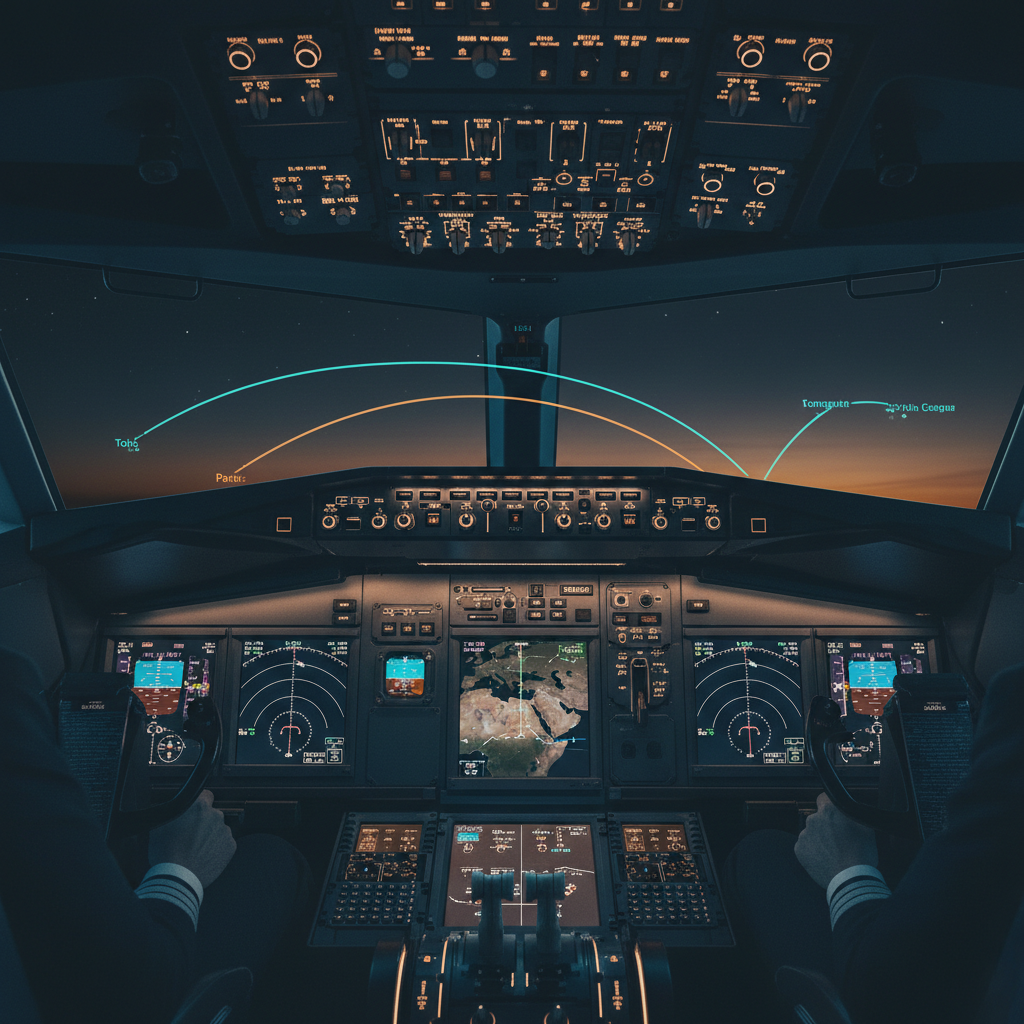
How operators are flying Europe ↔ Asia in 2026 without Russian airspace — southern, Central Asian, and polar options with real fuel math.
How operators are flying Europe ↔ Asia in 2026 without Russian airspace — southern, Central Asian, and polar options with real fuel math.
Where things stand
Russian airspace has been closed to EU, UK, US, Canadian, Japanese and Australian operators since early 2022, and there is no sign of that changing in 2026. The closure affects everything from G650-class business jets ferrying between London and Tokyo to 777-class cargo movements between Frankfurt and Seoul. Even where bilateral overflight rights nominally exist, insurance war-risk exclusions and ICAO bulletins published through the State Letter system make Russian routings commercially impractical for most Western-registered tails.
The operational consequence is that almost every Asia–Europe leg now adds between 90 minutes and four hours of block time. For longer pairings such as London–Tokyo or Frankfurt–Seoul, the additional fuel burn pushes payload-restricted aircraft into mandatory tech stops. The good news is that the alternative corridors are now mature: Central Asian states have built ATS capacity, Middle East FIRs have absorbed the additional traffic, and southern routings through Türkiye and the Caucasus remain reliable.
Southern corridor: Türkiye, Caucasus, Central Asia
The most common reroute for Europe–East Asia traffic runs UNL/Türkiye → LTAA → UDDD (Yerevan) or UBBB (Baku) → UTAA (Ashgabat) or UTTT (Tashkent) → ZWWW (Ürümqi). This corridor is well-coordinated and operates with English-only HF over the longer sectors. Slot constraints in Turkish FIRs (LTAA, LTBB) occasionally bite during European afternoon peaks, but most ferry-style movements clear with 24-hour notice. LFS files via this routing daily and we maintain pre-coordinated handler relationships at UDYZ, UTTT and ZWWW for tech stops.
Northern corridor: trans-polar via Alaska
For US-based operators crossing to North Asia, the trans-polar route via PANC remains the cleanest. From Europe, polar routings via BIKF → BGSF → CYZF → PANC add significant block but avoid Central Asia entirely. The fuel math is rarely favourable unless the destination is north-east Asia (Japan, Korea), and only operators with current polar-ops approvals (cosmic radiation monitoring, cold-fuel procedures, alternate availability) should plan it.
Tech-stop selection
For G550/G650/Falcon 7X-class aircraft, OBBI (Bahrain) and OMDB/OMDW (Dubai) are our preferred eastbound tech stops out of Western Europe; both offer H24 customs, no curfew, and dispatcher-grade ground times under 75 minutes. For westbound legs out of East Asia, VTBS (Bangkok), VHHH (Hong Kong), and WSSS (Singapore) work well, though VHHH slot availability has tightened. We cover the deeper trade-offs in our tech stop selection guide for the Gulf–West Africa corridor — the same logic applies northbound.
Fuel and payload math
Across a typical London–Tokyo pairing, the southern reroute adds roughly 5,500–6,200 kg of trip fuel on a G650ER and forces a payload reduction of 4–6 passengers if you want to fly nonstop. Most operators choose a single tech stop at OBBI or UTTT instead. We model the trade-off in dispatch using current Platts uplift posts — see our Gulf jet fuel pricing breakdown for how those numbers move week to week.
Permits and lead times
Türkiye, Azerbaijan, Georgia, Turkmenistan, Uzbekistan and Kazakhstan all require overflight permits with lead times of 24–72 hours. China overflight via ZWWW requires CAAC approval with 7-day standard lead, though urgent slots are workable through our Beijing handler network. LFS holds standing handler contacts in each of these jurisdictions and routinely turns short-notice ferries within 24 hours where the underlying CAA can move.
Related LFS resources
Talk to LFS
LFS Aviation runs 24/7 dispatch from Bahrain. If you have a movement that touches any of the above, send us a trip request or contact our duty desk. We respond inside one hour.
Operator FAQs
Can any operators still overfly Russia in 2026?
Russian-registered aircraft and a small number of state and Chinese operators still use Russian airspace. Western commercial and business aviation operators remain effectively excluded by a combination of state bans and war-risk insurance exclusions.
What is the fastest Europe–East Asia reroute?
The southern corridor through Türkiye, the Caucasus, and Central Asia is typically fastest. Polar routings add more block time and are only competitive for North-Asia destinations from northern Europe.
Do we always need a tech stop?
No — G650ER and Global 7500 class aircraft can usually fly nonstop with payload restrictions. Anything smaller (G550, Falcon 7X, Challenger 650) typically benefits from a Gulf tech stop both for fuel and crew duty.
How much lead time do Central Asian permits need?
24–72 hours is typical. China overflight needs 7 days standard, though urgent slots can be worked in 24–48 hours through established handler channels.
LFS handles launch-batch-2026-05 24/7.
Send the trip — we acknowledge in under 60 minutes during working hours, immediately for AOG.