
The part is only half the problem
An AOG is measured in days of lost operation, and the clock runs from the moment the aircraft stops, not from when the part is found. Once a supplier has the component, a second race begins: getting it — and often the engineers to fit it — to an aircraft that may be sitting at an airport with no scheduled freight service, in a country whose customs and permit processes were never part of anyone's plan.
LFS works the aviation side of that race. The desk arranges the aircraft that carries the part — a charter freighter for an engine, a business jet for a box of avionics and two engineers — and coordinates everything the movement needs: overflight and landing permits filed urgently, handling at both ends, customs coordination for the component, and the receiving arrangements where the grounded aircraft waits. The wider AOG support for the grounded aircraft itself runs in parallel.
Choosing how the part travels
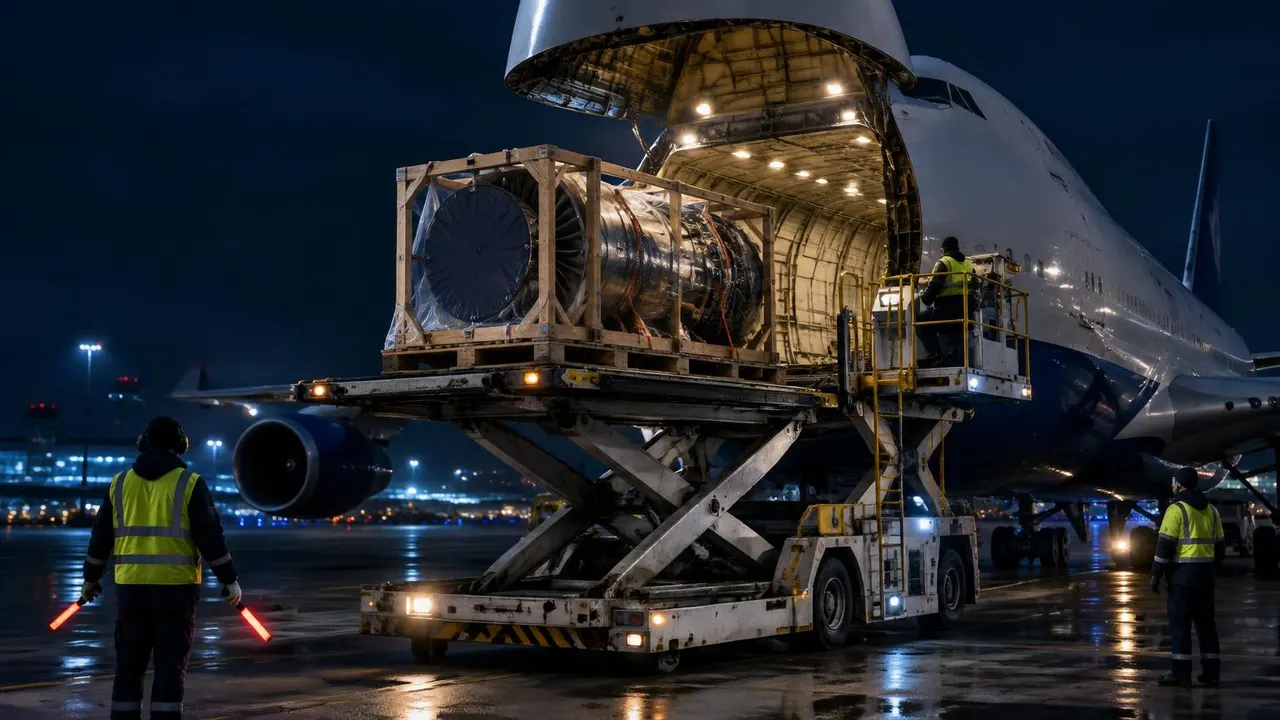
The right aircraft for an AOG part depends on the part. A windscreen or avionics box can fly as accompanied baggage or cargo on a business jet already going the right way. An engine, a propeller or a landing gear assembly needs a freighter with the right door and floor loading, or an outsize cargo aircraft for the largest components. The desk matches the movement to the aircraft options actually available, with realistic positioning times.
Speed and cost trade against each other honestly. A dedicated charter is fastest and most expensive; a part consolidated onto an existing movement is cheaper but waits for that movement's schedule. The desk presents the real options with real timings rather than a single take-it-or-leave-it quote, because the operator's decision depends on what the grounded aircraft is costing per day — a number only the operator knows.
Urgent permits for parts flights
A parts flight is usually a non-scheduled flight arranged at short notice into a country the operator may never have served, which means overflight and landing permits filed urgently against a grounded-aircraft clock. Many authorities treat genuine AOG movements with some priority, but priority is not exemption — the application still has to be complete, correctly routed and followed up.
The desk files these applications with the AOG context stated plainly: the grounded aircraft, its location, the part being carried and the engineers travelling. Where an authority offers an expedited channel for humanitarian or AOG movements, the application uses it; where it does not, the desk works the standard channel as fast as it can be worked. Approval remains with the authority in every case, and the desk reports status honestly — filed, acknowledged, queried, approved — rather than optimistically.
Customs and documentation for aircraft parts
Aircraft parts cross borders under customs regimes that reward preparation. A part exported for repair and re-imported, a loaner component, and an outright sale all move under different customs treatment, and the wrong paperwork can hold a part at a border while the aircraft it would fix sits idle. Temporary import arrangements, where available, can avoid duty on parts that will leave again — but they have to be set up correctly before arrival, not argued about at the cargo shed.
The desk coordinates with the shipper, the consignee and the customs broker at the destination so the documentation matches the actual movement: what the part is, why it is travelling, and whether it stays or returns. Dangerous goods — and many aircraft parts are, from oxygen generators to fuel-system components — need the correct declaration and an aircraft and crew authorised to carry them. That check happens before the part is accepted for carriage, not at the aircraft door.
Receiving the part at the grounded aircraft
Arrival is where uncoordinated parts movements lose the time they gained in the air. The freighter lands, and then: which handler meets it, who clears the part through customs, how it gets airside to the grounded aircraft, and are the engineers' visas and airport access arranged? At 03:00 at a secondary airport, none of these questions answer themselves.
The desk arranges the receiving side before the parts flight departs: handling and customs clearance confirmed, airside transport for the component, access and accommodation for the travelling engineers, and a direct line between the parts flight and the team working on the grounded aircraft. The goal is that the part is moving toward the aircraft within minutes of the freighter's doors opening.
Setting up before the next AOG
Operators who fly regularly into remote or thinly served regions can take much of the pain out of parts movements before they are needed: knowing which charter capacity is realistically available in the regions they fly, which states on their routes have fast and slow permit channels, and who to call at 03:00. The desk builds that picture as part of ongoing trip support, so an AOG is a problem to solve, not a process to invent.
For an active AOG, call the desk directly — the phones are answered 24/7/365. To scope standing support for your operation, send your fleet, typical routes and regions through the request form and the desk will outline what AOG parts movement cover would look like for your flying.
Engineers, tooling and the people who travel with the part
Many AOG movements carry more than freight: the engineers who will fit the part, their tooling, and sometimes a representative of the maintenance provider or lessor. These travellers need what any crew needs — transport, accommodation, airside access and, in some states, visas or work-permit considerations that a tourist entry would not cover. A part that arrives without its engineers, or engineers held at immigration, leaves the aircraft just as grounded.
The desk arranges the people's journey alongside the part's: seats on the same aircraft where possible, hotels near the airport, and the access arrangements that let engineers reach the aircraft airside with their tools. Where the grounded aircraft's own crew is waiting, their accommodation and duty position is managed at the same time, so the whole human picture of the recovery is coordinated rather than pieced together by each party separately.
Communication during an AOG movement
An AOG concentrates stakeholders: the operator, the maintenance provider, the parts supplier, the insurer, sometimes the aircraft's owner or lessor, and the passengers whose trip was interrupted. Each wants updates, and each asks the desk if nobody coordinates the flow. Left unmanaged, the desk spends the event answering the same question five times instead of moving the part.
The desk establishes a single update rhythm at the start of the event — who is informed, how often, and through which channel — and reports status in plain terms: what is confirmed, what is pending, and what the current best estimate is for the part's arrival at the aircraft. Estimates are labelled as estimates. When the plan changes, the update says what changed and why, so every party is planning from the same facts.
When the part cannot fly
Not every component can move by air on the timescale an AOG demands. Some parts are too large for available freighter capacity on the route, some are dangerous goods that no available aircraft can carry, and some routes simply have no charter capacity at short notice. Honest planning means saying so early, when a road or sea leg, a part from a different source, or a cannibalised component from another aircraft in the fleet might solve the problem faster.
The desk's role in these cases is to give the operator the real picture quickly: which air options exist and at what timing, what the constraints are, and where the decision points sit. The operator, the maintenance provider and the parts supplier then decide with full information. An AOG is expensive enough without spending the first day pursuing a flight option that was never going to work.
Operational planning questions
Does LFS supply aircraft parts or carry out repairs?
No. LFS does not trade in parts and does not perform maintenance. The desk coordinates the flight and logistics side: the aircraft carrying the part, permits, handling, customs coordination and engineer travel. Your parts supplier and maintenance provider do their work; LFS gets them and the part to the aircraft.
How fast can a parts flight be arranged?
The desk responds immediately, 24/7/365. Actual timing depends on aircraft availability, positioning distance, permit lead times in the states involved and customs at the destination. The desk gives realistic timings per option rather than a generic promise.
Can a part travel as dangerous goods?
Many aircraft parts are classed as dangerous goods and require correct declaration plus an aircraft and crew authorised to carry them. The desk checks this before the part is accepted for carriage and arranges compliant transport.
Who handles customs for the part?
Customs clearance is coordinated with the shipper, consignee and a broker at the destination. The desk ensures the documentation matches the movement — sale, loan, or repair and return — so the part is not held at the border while the aircraft waits.
Can the same desk support the grounded aircraft too?
Yes. The AOG support service covers the grounded aircraft itself — parking, handling, crew and passenger logistics — in parallel with the parts movement, so the whole event is coordinated from one desk.
Operational references
Reviewed 23 October 2026. Current AIPs, NOTAMs, authority decisions and written provider acceptance govern the actual flight.
Send your operational requirements
Provide your route, aircraft details, UTC schedule and required services. LFS will review the request and confirm the proposed coordination scope, documentation and commercial terms. Acceptance remains with the relevant authority, airport and service provider.
Request a Quote