
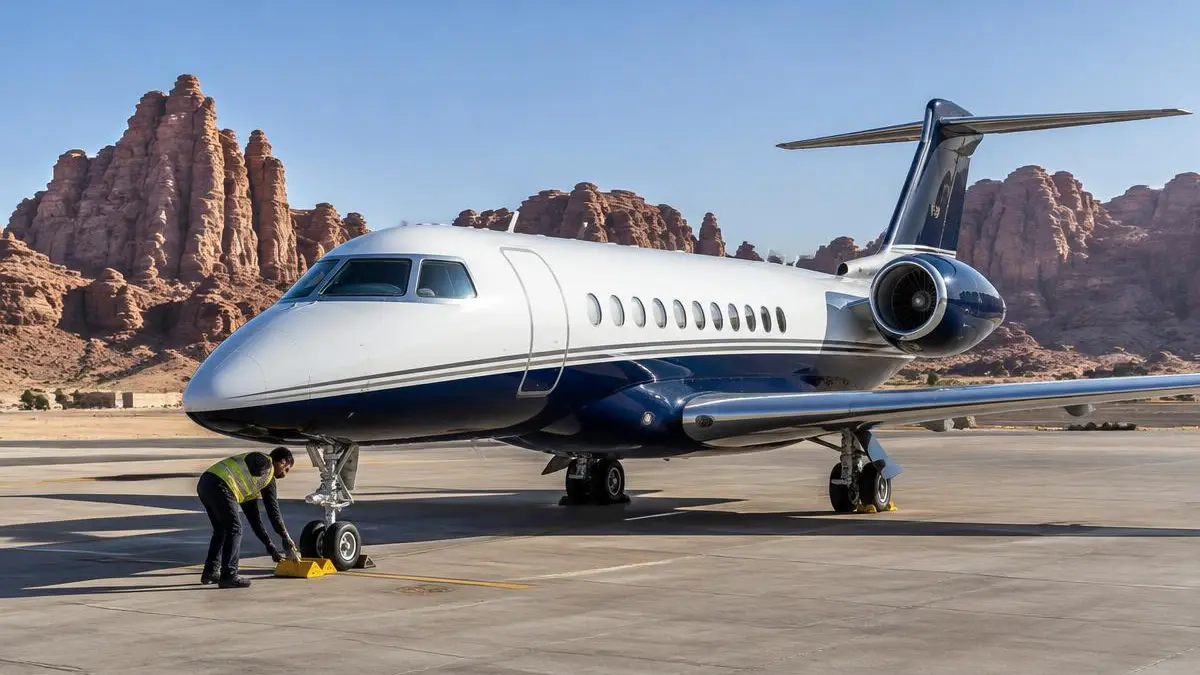
Representative aviation illustration; not a photograph of this airport, LFS facilities or personnel.
Why AlUla is a winter destination
AlUla sits in a desert valley in the Medina region, surrounded by sandstone cliffs and rock formations. Its best-known landmark is Hegra, the Nabataean city of monumental rock-cut tombs that became Saudi Arabia's first UNESCO World Heritage site. Under the Royal Commission for AlUla, the area has developed resorts, cultural venues and an events programme that is concentrated in the cooler months, roughly from late autumn to early spring.
For business aviation this means a clear seasonal pattern. Private visitors, incentive groups, cultural delegations and event guests arrive mainly between November and March, often at weekends or around specific festival dates. AlUla is not a large hub, so a few simultaneous arrivals can make a real difference to stand availability and handling resources. Early planning matters more here than at Riyadh or Jeddah.
AlUla International Airport at a glance
AlUla International Airport (ICAO OEAO, IATA ULH) is located a short drive from the old town and the main resort areas. It handles scheduled domestic services and, at times, international and charter flights, together with general aviation. Facilities, operating hours and parking capacity are smaller than at the major Saudi airports, and they can change as the region develops. Operators should not assume 24-hour operation, unlimited parking or every handling service at OEAO; LFS checks each item for your dates.
Our OEAO airport page summarises the published airport data. The current AIP, NOTAMs and the airport's written acceptance always take precedence over any summary, including ours.
Permits for flights into AlUla
A foreign-registered private or non-scheduled commercial flight into AlUla needs the same GACA permission as any other Saudi landing. If the aircraft first enters the kingdom elsewhere, or arrives directly from abroad, the routing and the point of entry need to be consistent with the airport's customs and immigration arrangements for that date. Domestic sectors, for example Riyadh to AlUla and back, must be included in the request.
LFS prepares the permit application with your documents, submits it and passes on the approval reference. We cannot guarantee approval or timing. For international arrivals, ask us to confirm that border formalities are available at OEAO for your arrival time; if they are not, the itinerary may need a first landing at another Saudi port of entry. The Saudi permits guide gives the background.
Ground handling and passenger arrangements
At AlUla, the handling request should be as specific as possible: passenger numbers, baggage volume, any oversized items such as camera equipment, vehicle needs and the time passengers want to leave the airport. LFS passes the request to the handling provider, checks which services can be accepted and confirms them in writing. Typical requests include ramp handling, passenger assistance, ground power, water and toilet servicing, cabin cleaning and catering.
Ground transport between the airport and resorts in the valley can take longer than expected, especially in the evening during a festival. Agree vehicle numbers and pick-up times in advance. If guests visit Hegra or other heritage sites, entry is controlled by the site operators and separate from the flight; your ground programme should be booked through the appropriate channels.
Desert winter weather at AlUla
Winter days in AlUla are generally clear and pleasant, but nights in the desert valley can be cold, with early-morning temperatures much lower than at the coast. Crews should plan for cold soaks on overnight stops, cabin pre-heating with ground power where available, and the possibility of frost on surfaces on the coldest mornings. Strong winds and dust occasionally reduce visibility, and the surrounding terrain needs attention in approach and departure planning.
Check the current METAR, TAF and NOTAMs before every sector and include a realistic alternate. Because AlUla is relatively remote, the choice of alternate and the fuel to reach it deserve more thought than on a sector into a major hub. LFS flight planning and dispatch can prepare the route, weather and fuel analysis for the flight.
Parking and reposition options
Parking at OEAO may be limited, particularly during the busiest weekends of the season. Ask for parking with the handling request and give exact arrival and departure times. If the airport cannot accept the whole stay, the usual alternatives are a drop-off with the aircraft repositioning to a larger airport such as Riyadh, Jeddah or Medina, and returning to collect the passengers.
A reposition plan adds sectors, crew duty time and permit changes, so it is better agreed before departure. LFS records which plan has been accepted and shares it with the crew, so everyone knows whether to expect a turnaround or an overnight stay.
Fuel, catering and crew accommodation
Fuel availability and payment methods at a regional airport should always be confirmed before the flight. Give the expected uplift and the fuel release or card you intend to use; if the uplift is uncertain, consider carrying fuel for the return or the reposition sector. Catering may need to be ordered further ahead than at a major airport, and some specialist items may have to be sourced from outside the region.
Crew accommodation in AlUla ranges from resort properties to simpler hotels, and availability falls sharply during major events. Book crew rooms as soon as the schedule is firm. LFS crew logistics can coordinate hotels and transport for crews on overnight stops.
How to send a useful winter enquiry to LFS
Use the existing LFS flight-support request form and name AlUla International (OEAO) in the remarks. Give the operator, aircraft type and registration, every sector including positioning legs, UTC arrival and departure times, passenger and crew numbers and the purpose of flight. Say which sectors are confirmed and which are still provisional, because permits, slots, parking and handling are assessed against the schedule you actually intend to fly.
List the services needed on each leg: permits, flight planning and dispatch, ground handling, fuel, parking, crew hotels, passenger transport or catering. A useful reply separates an indicative quotation from accepted authority, airport and provider references. If plans change during the season, quote the LFS trip reference and list the affected sectors so the operations desk can review the knock-on effects before the aircraft departs. For a quick question before you have a schedule, contact flight operations.
Frequently asked operational questions
What is the ICAO code for AlUla International Airport?
AlUla International Airport is OEAO (IATA ULH). It serves the AlUla valley and the Hegra World Heritage site.
Can a private jet fly directly from abroad to AlUla?
It may be possible, but border formalities and operating hours must be confirmed for your date. Otherwise a first landing at another Saudi port of entry may be needed.
Is parking available at AlUla for several days?
Parking is limited and assessed for each date. If a long stay is not accepted, LFS can review a drop-off and reposition plan.
When is the busiest season at AlUla?
The cooler months, roughly November to March, when most festivals, events and resort stays take place.
Do I still need a GACA permit for a domestic sector to AlUla?
Foreign-registered aircraft normally need GACA permission covering all sectors in Saudi Arabia, including domestic legs. Include them in the request.
Does AlUla have cold-weather considerations?
Yes. Nights in the desert valley can be cold, so crews should plan for cold soaks and check forecasts, METARs and NOTAMs.
How do I request handling at AlUla?
Use the LFS request form at /request with your aircraft, route, UTC times, passenger and baggage details and the services you need.
Authority and airport references
Reviewed 17 November 2026. Current AIPs, NOTAMs, authority decisions and written airport and provider acceptance govern the flight.
Send your winter flight requirements
Provide your operator, aircraft, route, UTC schedule and required services through the existing LFS enquiry process. State the airport and distinguish confirmed sectors from provisional plans.