
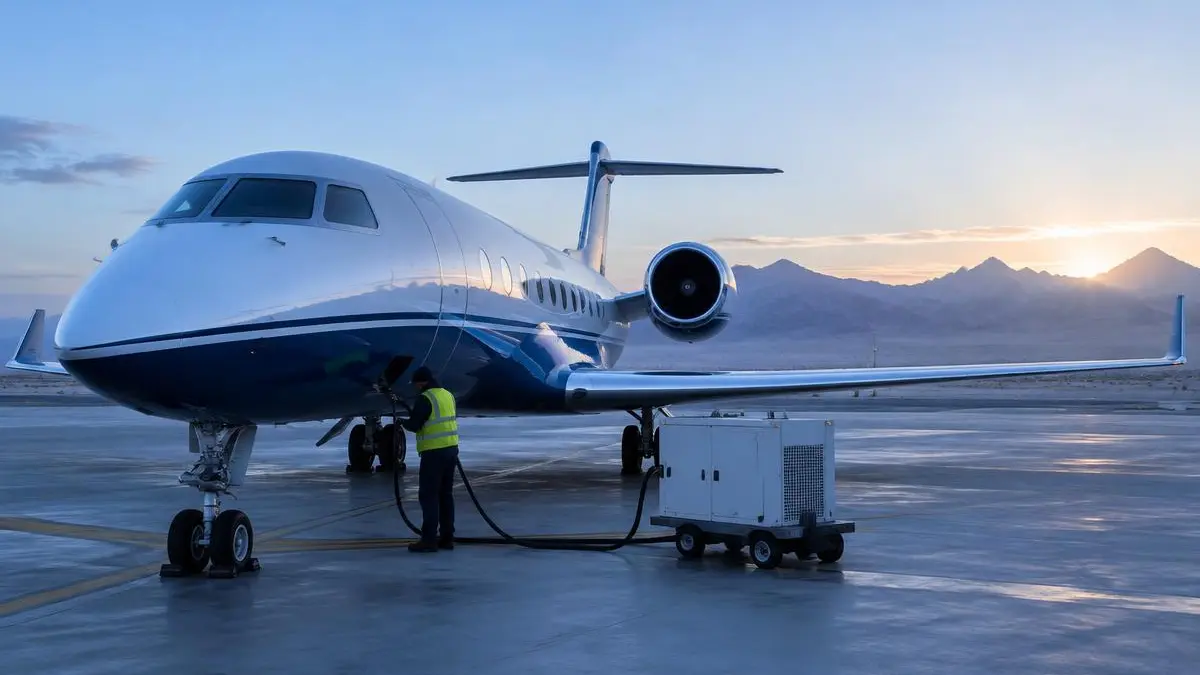
Representative aviation illustration; not a photograph of this airport, LFS facilities or personnel.
Why winter is the busy season for Saudi business aviation
For most of the year, heat drives the planning of a flight into Saudi Arabia: density altitude, cabin cooling and ramp working hours. In winter the problem changes. Temperatures fall, aircraft performance improves and the kingdom fills its calendar with seasons, festivals, exhibitions and sporting events. Riyadh hosts its long winter entertainment programme, AlUla runs its main visitor season among the sandstone outcrops of the north-west, and Jeddah remains busy with Umrah traffic all year. The result is more demand for the same handling teams, parking stands and hotel rooms.
That demand is uneven. A quiet weekday can turn into a fully booked apron when a concert, a summit or a state visit is announced at short notice. Operators that plan the season early, and send firm schedules rather than open-ended requests, generally find it easier to secure the arrangement they want. LFS reviews each request against the airport, the date and the services required, and tells you plainly when an alternative airport or a reposition plan is the more realistic option.
GACA permits for private and non-scheduled flights
Foreign-registered private and non-scheduled commercial flights into Saudi Arabia normally need prior permission from the General Authority of Civil Aviation (GACA). The application covers the operator, aircraft, crew, passengers, routing, schedule and purpose of flight, and is supported by documents such as the certificate of registration, airworthiness certificate, insurance and, for commercial operations, the air operator certificate. Overflight of Saudi airspace has its own permission requirements, which also apply to sectors that do not land in the kingdom.
LFS prepares and submits these requests, follows them with the authority and passes on the approval reference once it is issued. We cannot promise approval or a fixed turnaround time; GACA decides both. Flights carrying passengers with state or protocol status may need diplomatic clearance through official channels instead, so mention this at the start. Our Saudi permits guide explains the general process and the GACA accredited-agent page describes how agent-led requests work.
Choosing the right Saudi airport for the trip
Most winter business aviation demand is concentrated at three gateways. King Khalid International (OERK) serves Riyadh and the government, business and entertainment activity of the capital. King Abdulaziz International (OEJN) serves Jeddah, the Red Sea coast and connections for Makkah. AlUla International (OEAO) serves the heritage region of Hegra and the AlUla valley, where winter is the main visitor season. Each airport has its own handling arrangements, parking constraints and operating hours, so the choice should be made with the ground programme in mind.
Other airports, such as Dammam (OEDF) for the Eastern Province or regional airports closer to new tourism projects, may suit a particular itinerary. Tell LFS where your passengers actually need to be and when; we compare the realistic airport options and the handling available at each before you commit to a schedule. The airport-specific guides for Riyadh, Jeddah and AlUla go into more detail.
What ground handling coordination covers
Through LFS you can request the standard business aviation handling package: marshalling, chocks and ramp supervision, passenger and crew assistance through the terminal or general aviation facility, baggage handling, ground power and air start where available, potable water and lavatory servicing, cabin cleaning and transport between the aircraft and the terminal. We pass these requirements to the licensed agent at the chosen airport, confirm what has been accepted and record any service that is not available.
For VIP and government flights, additional items may be needed: separate passenger routing, protocol coordination, security escorts or vehicle access to the aircraft. These depend on airport security rules and approval from the relevant authorities, and are not available on every flight. LFS asks for them early and does not confirm them to you until they are accepted. Details of the service range are on our ground handling capabilities page.
Winter weather and operational planning in Saudi Arabia
Inland airports such as Riyadh and AlUla can be surprisingly cold before dawn in December and January, while the Red Sea coast around Jeddah stays mild but can receive short, intense rain showers that flood roads and slow ground transport.
Winter brings real operational benefits in the Gulf: cooler air improves take-off performance, reduces the need for heavy cabin cooling on the ground and makes ramp work easier. It also brings hazards that summer crews rarely meet. Plan alternates with low visibility in mind, carry realistic extra fuel for holding on fog-prone mornings, and check the current METAR, TAF and NOTAMs before each sector rather than relying on seasonal averages. If the departure airport in Europe or Asia is affected by snow or icing, build de-icing time into the schedule so the slot or arrival time in the Gulf is not lost.
Parking, fuel and turnaround planning
Parking is the constraint operators most often underestimate in a Saudi winter. During major events, stands for business aircraft may be allocated for limited periods, and long stays may not be accepted at the arrival airport. Ask for parking with the handling request and give exact arrival and departure times. If parking is limited, LFS discusses a drop-off and reposition plan, a shorter stay or an alternative airport with you before the schedule is fixed.
Fuel is supplied by the airport fuel providers against a release, contract or card that covers your aircraft. Give the expected uplift, payment method and any fuel-card details so acceptance can be checked in advance. For quick turnarounds, request fuel, catering and cleaning at stated times rather than "on arrival". Our fuel coordination page explains how LFS arranges uplifts across the region.
Crew, passengers and entry requirements
Entry requirements for crew and passengers depend on nationality, purpose of travel and current Saudi rules, which can change. Check visa and entry conditions for every person on board before departure; LFS can point you to the relevant information but the authorities decide. For crew rest, give hotel preferences and room counts early, because hotels near event venues fill quickly in winter. Our crew logistics page covers hotel and transport coordination.
If the itinerary includes several Saudi cities, or onward sectors to other Gulf states, send the complete plan in one enquiry. Domestic sectors for foreign aircraft, positioning legs and changes of passengers may each affect the permit, so it is better to show them all at once than to add them one by one after approval.
How to send a useful winter enquiry to LFS
Use the existing LFS flight-support request form and name Saudi Arabia in the remarks. Give the operator, aircraft type and registration, every sector including positioning legs, UTC arrival and departure times, passenger and crew numbers and the purpose of flight. Say which sectors are confirmed and which are still provisional, because permits, slots, parking and handling are assessed against the schedule you actually intend to fly.
List the services needed on each leg: permits, flight planning and dispatch, ground handling, fuel, parking, crew hotels, passenger transport or catering. A useful reply separates an indicative quotation from accepted authority, airport and provider references. If plans change during the season, quote the LFS trip reference and list the affected sectors so the operations desk can review the knock-on effects before the aircraft departs. For a quick question before you have a schedule, contact flight operations.
Frequently asked operational questions
Do I need a GACA permit to land a private jet in Saudi Arabia?
Foreign-registered private and non-scheduled commercial flights normally need prior GACA permission. LFS prepares and submits the request; the authority decides.
Which Saudi airports are busiest for business aviation in winter?
Riyadh (OERK), Jeddah (OEJN) and AlUla (OEAO) see the strongest winter demand because of entertainment seasons, Umrah travel and heritage tourism.
Can LFS guarantee parking during a busy winter event?
No. Parking depends on airport availability for your dates. If it is limited, LFS reviews a drop-off and reposition plan or an alternative airport with you.
Does LFS deliver ground handling itself in Saudi Arabia?
LFS coordinates the services you request with the licensed handling agent at the airport, which delivers them under airport rules.
What weather should crews expect in a Saudi winter?
Cooler temperatures, cold early mornings inland, occasional dust and, on some days, rain showers. Always check current forecasts, METARs and NOTAMs.
Can one enquiry cover several Saudi airports?
Yes. Send the full itinerary, including domestic and positioning sectors, so permits, handling and parking are reviewed together.
How do I request Saudi winter ground handling?
Use the LFS request form at /request with your aircraft, route, UTC times, passenger numbers and the services required at each airport.
Authority and airport references
Reviewed 17 November 2026. Current AIPs, NOTAMs, authority decisions and written airport and provider acceptance govern the flight.
Send your winter flight requirements
Provide your operator, aircraft, route, UTC schedule and required services through the existing LFS enquiry process. State the airport and distinguish confirmed sectors from provisional plans.