
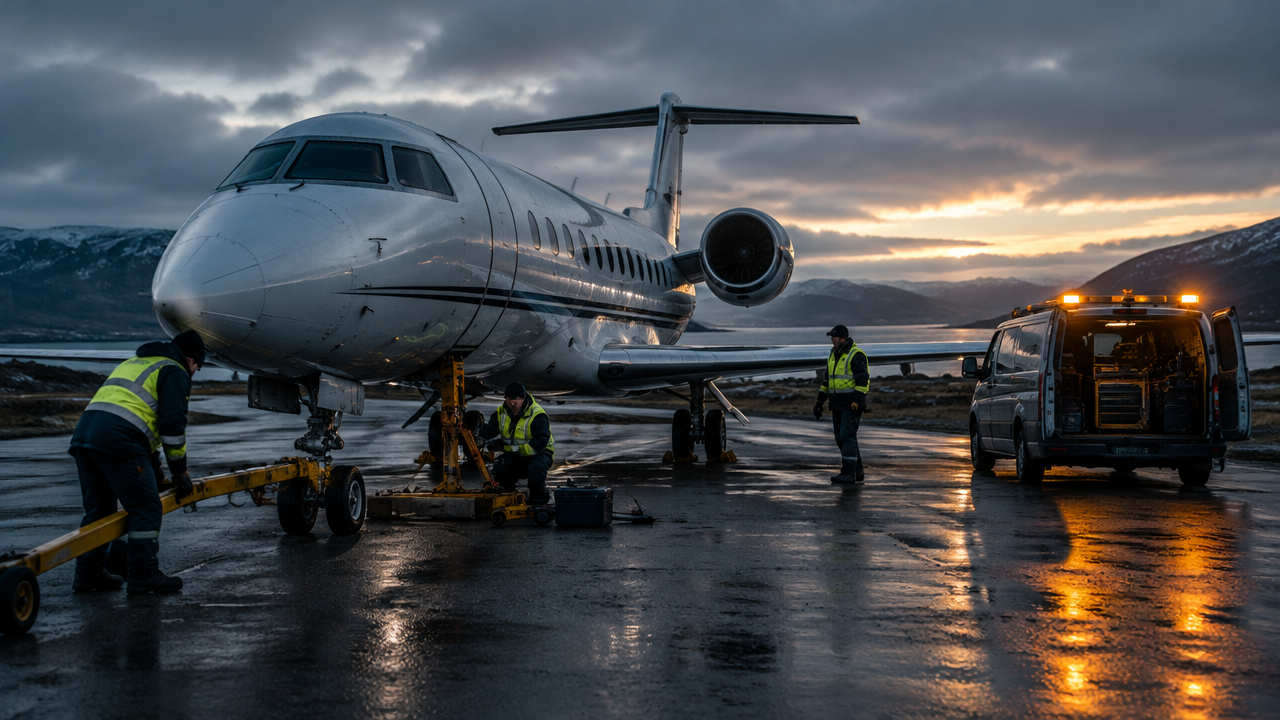
Recovery is a coordination problem
When an aircraft cannot fly, everyone involved has a piece of the problem: the operator owns the airworthiness decisions, the maintenance organisation owns the repair, the insurer wants the costs controlled, and the airport wants its ramp back. Nobody's job is to hold the whole picture — which is why recoveries stall. Engineers arrive without parts, parts arrive without customs clearance, and the ferry permit application starts only after the repair is done.
LFS works the recovery as a coordinated operation from the first call. The desk maps what has to move — people, parts, tooling, possibly a replacement aircraft for the passengers — and starts every element in parallel: AOG parts logistics, engineer travel and accommodation, handling and parking at the stranded location, and early engagement with the authorities whose permissions the recovery flight will need. The operator's engineering decisions remain theirs; the desk makes sure logistics never become the reason the aircraft is still on the ground.
Getting engineers and parts to the aircraft
The critical path of most recoveries runs through parts and people. A component that exists in a warehouse in another country is useless until it is on the aircraft — and aircraft parts move under their own rules: dangerous goods classifications for many components, customs procedures for temporary export and re-import, and airline or charter capacity that has to be found and booked. Engineers need visas, transport and somewhere to work; at a remote field, even power and lighting for a night shift may need arranging.
The desk books and tracks the parts movement end to end, with customs prepared at both ends so a shipment is not held while the aircraft waits. Engineer travel is arranged to match the parts' arrival, not before it. At the stranded location, the desk confirms what the airport and handler can provide — hangar space, ground power, security for an aircraft that may sit for days — and what has to be brought in.
Permits and permissions for the recovery flight
Getting the aircraft out is a flight like any other, and often an unusual one: a ferry flight with a permit-to-fly instead of a full certificate of airworthiness, a one-off routing from a field the operator never serves, sometimes with conditions attached — altitude limits, no passengers, a specific crew. Each of those conditions has to be reflected in the permissions requested, or the recovery flight stalls at the permit stage after the repair is complete.
LFS coordinates the permits for the recovery or ferry flight with the relevant authorities: overflight and landing permits for the routing, and liaison with the operator and its maintenance organisation so the permit application matches the actual condition and limitations of the aircraft. Authority approval is never guaranteed and never instant — which is exactly why the desk starts the paperwork while the spanners are still turning, not after.
Looking after the aircraft while it waits
A stranded aircraft is an asset sitting exposed: on someone else's ramp, in someone else's security perimeter, sometimes in harsh weather, accruing parking charges by the day. Preservation tasks, security arrangements, and the airport's patience all have to be managed. At some fields, an immobile aircraft on a busy apron becomes a problem the airport wants solved on its own timetable — which can mean pressure to tow or relocate the aircraft at short notice.
The desk manages the stay: parking or hangar arrangements appropriate to the expected duration, security and access control for the aircraft and the parts staged beside it, and a standing line to the airport so the operator hears about pressure early rather than as an ultimatum. Where the stay will be long, the practical options — including moving the aircraft to a better-equipped field once it can be towed or ferried — are costed and presented to the operator.
Passengers, crew and the schedule the aircraft left behind
The stranded aircraft is only part of the disruption. Its passengers need to get where they were going; its crew is running out of duty days in a hotel they never planned to visit; and the aircraft's next trips are still on the schedule. A recovery plan that fixes the aircraft but abandons the schedule has solved the wrong half of the problem.
The desk works the human and schedule side in parallel with the engineering: onward travel or a replacement aircraft for the passengers, crew hotels, transport and rotation, and a realistic recovery of the flying programme once the aircraft is back. For operators with several aircraft, that can mean re-planning the fleet's week around the gap. The goal is that the recovery ends with the operation whole — not with an airworthy aircraft and a week of broken trips behind it.
What to have ready when you call
The first call goes faster with the essentials: aircraft type and registration, where it is, the nature of the problem in general terms, who the maintenance organisation is or whether one is needed, and what the passengers and crew are doing. Nothing has to be final — the desk expects the picture to change — but each fact removes a phone call from the critical path.
The LFS duty desk is on watch 24/7/365 and treats a stranded aircraft as an immediate priority. Call the desk or send the details through the request form, and the recovery coordination starts from the first conversation — including an honest early view of the likely timeline, because a recovery plan built on optimistic guesses helps no one.
Costs, insurers and keeping the recovery defensible
Recoveries generate costs quickly and from many directions: the repair itself, parts freight at AOG rates, engineer travel and hotels, parking and security at the stranded field, replacement capacity for the passengers, and the ferry or positioning flights at the end. Operators with hull or business-interruption cover will find the insurer wants the costs itemised, justified and consistent with the decisions as they were made — not reconstructed from memory weeks later.
The desk keeps the recovery's commercial record as it goes: what was booked, at what rate, and why. Quotes for the significant items — freight, charter capacity, hangarage — are obtained and held, and the operator approves the material spends before commitment. That discipline is not about paperwork for its own sake; it is what makes the difference between an insurance conversation that settles and one that drags. The desk's summary at the end of the recovery gives the operator and its insurer a single, ordered account of the event.
Operational planning questions
Does LFS perform the repair itself?
No. Airworthiness and repair decisions belong to the operator and its maintenance organisation. LFS coordinates everything around the repair: parts and engineer movement, permits, handling, parking and the recovery flight's flight support.
Can LFS move parts internationally at short notice?
Yes. AOG parts movement — including dangerous goods handling and customs preparation — is a core part of the service. The desk books and tracks the shipment end to end so it is not held at a border while the aircraft waits.
Who arranges the ferry permit for the recovery flight?
LFS coordinates the overflight and landing permits and liaises with the operator and maintenance organisation so the application matches the aircraft's actual condition and limitations. The permit-to-fly itself is issued by the relevant airworthiness authority.
What happens to the passengers of a stranded aircraft?
The desk arranges onward travel or a replacement aircraft with the operator, plus crew hotels, transport and rotation. The schedule the aircraft left behind is re-planned in parallel with the engineering recovery.
Can the aircraft be moved to a better-equipped airport?
Often, yes — by tow on the ground, or by ferry flight once airworthy to fly. The desk costs the options and coordinates the permissions and logistics for whichever the operator chooses.
How quickly does recovery coordination start?
From the first call. The duty desk operates 24/7/365 and begins the parallel workstreams — parts, people, permits, parking — immediately, because in a recovery every workstream is on the critical path.
Operational references
Reviewed 23 October 2026. Current AIPs, NOTAMs, authority decisions and written provider acceptance govern the actual flight.
Send your operational requirements
Provide your route, aircraft details, UTC schedule and required services. LFS will review the request and confirm the proposed coordination scope, documentation and commercial terms. Acceptance remains with the relevant authority, airport and service provider.
Request a Quote