
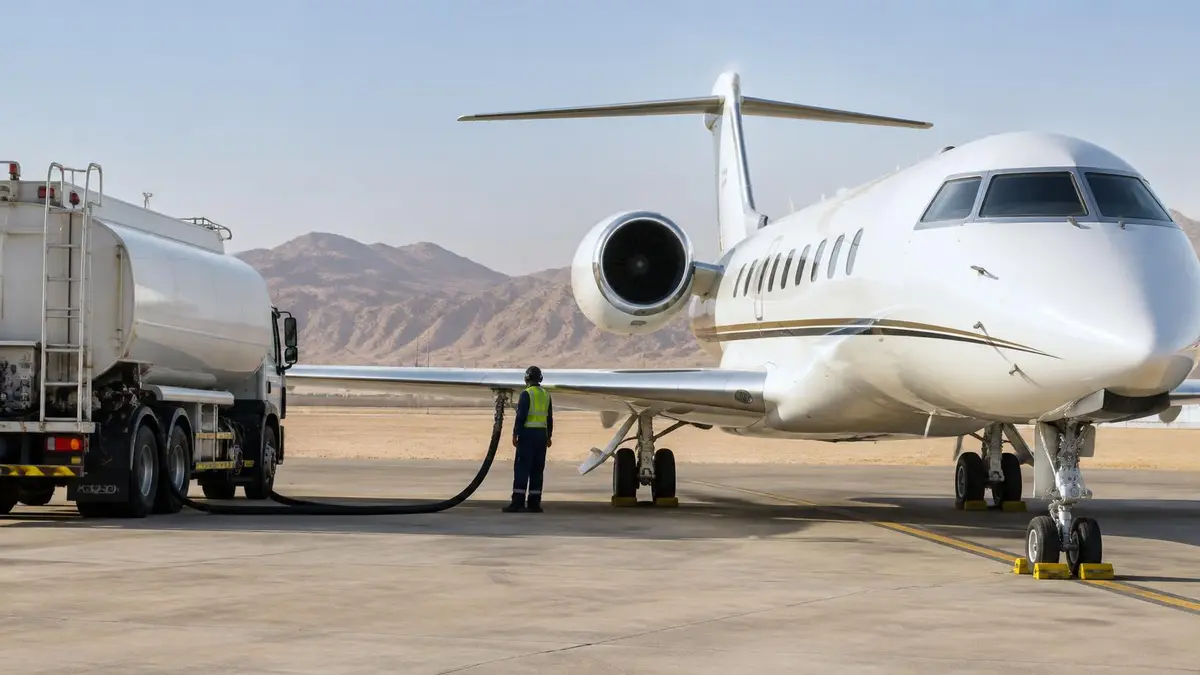
Representative aviation illustration; not a photograph of a specific airport, LFS facilities or personnel.
Why fuel needs coordinating in Saudi Arabia
Saudi Arabia covers a very large area, and business aviation flights often combine major airports such as Riyadh King Khalid International (OERK), Jeddah King Abdulaziz International (OEJN) and Dammam King Fahd International (OEDF) with smaller regional or tourism airports such as AlUla (OEAO) or the Red Sea area. Fuel availability, supplier arrangements, payment terms and operating hours are not the same at every airport, and a technical stop planned on assumptions can turn into a delay.
Fuel coordination removes that uncertainty before the aircraft departs. LFS checks with the supplier that the requested quantity of Jet A-1 can be delivered at the planned time, confirms how it will be paid for and passes the details to the handling agent, so the truck is there when the crew wants it and the release is accepted without a call to head office in the middle of the night.
How LFS arranges fuel uplift
Send the aircraft type and registration, the airport, the estimated arrival and departure in UTC and the expected uplift in litres, US gallons or kilograms. Tell the desk whether you will use a fuel card, an existing supplier contract or need LFS to arrange a release, and whether any additives or specific documentation are needed.
LFS then confirms availability and price route with the supplier, issues or checks the release, and adds the fuelling to the handling order so the agent coordinates the truck with the ramp. If fuel is needed with passengers on board, or the uplift is unusually large, LFS tells the handler and supplier in advance so the correct safety procedures can be arranged.
What the desk checks for each airport
Before confirming fuel, LFS reviews:
- Jet A-1 availability and the supplier serving the airport
- Supplier and airport operating hours for the planned uplift time
- Payment method: fuel card, contract, release or pre-payment
- Quantity limits and any advance-notice requirement for large uplifts
- Coordination with the handling agent and the departure slot
- Fuel receipts and delivery documentation for your records
Fuel cards, releases and pricing
Many operators carry a fuel card or hold contracts with international suppliers. Acceptance varies by airport and supplier, so LFS checks it for each stop rather than assuming it will work everywhere. Where the card is not accepted, or the operator prefers, LFS can arrange a fuel release through its own supplier relationships and include the cost in the trip invoice.
Fuel prices in the region move with the market, and airport fees, into-plane charges and taxes differ by airport. LFS quotes the price route that applies at the time of the request and tells you what is included. It does not publish fixed fuel prices, because a figure on a web page would be out of date before most trips fly. Read more about card programmes on aviation fuel cards.
Technical stops and tankering decisions
Saudi airports are often used as technical stops on routes between Europe, Africa and Asia. A fuel-only stop still needs a permit or permission, a handling agent and a confirmed fuel arrangement, and ground time should allow for the time it really takes to fuel, complete the paperwork and receive the departure clearance.
Operators sometimes decide whether to carry extra fuel from the previous stop or uplift in Saudi Arabia. That decision belongs to the operator and the flight crew, based on performance, price and the airport's situation. LFS supplies the availability and pricing information needed to make it and can include the stop in a full flight plan and weather package if required.
Fuel as part of a complete Saudi trip
Fuel is rarely the only service needed. LFS normally coordinates it together with GACA landing or overflight permits, ground handling, parking and crew logistics. For details of the permit side, see Saudi Arabia overflight and landing permits and business aviation trip support in Saudi Arabia.
For operators flying several sectors inside the kingdom, the desk keeps one fuel plan for the whole itinerary and updates every supplier when the schedule changes. That avoids the common problem of a supplier at the next airport still expecting the aircraft at the original time.
What to include in your enquiry
For fuel requests in Saudi Arabia, state the uplift for each airport, the unit you are using, the payment method and any card or supplier contract you hold. Mention passengers on board during fuelling and any special documentation your company or insurer requires.
Send the request through the existing LFS flight-support form. Give the operator name, aircraft type and registration, maximum take-off weight, every sector including positioning legs, UTC times, crew and passenger numbers and the purpose of flight. Say which sectors are confirmed and which are still provisional. A useful reply from LFS separates an indicative quotation from accepted authority, airport and provider references, so you always know which parts of the trip are actually approved. For a quick question before you have a schedule, contact flight operations.
Frequently asked operational questions
Does LFS supply fuel in Saudi Arabia?
LFS coordinates fuel with the licensed into-plane supplier at each airport. It does not own fuel stock or perform the uplift itself.
Is Jet A-1 available at every Saudi airport?
Availability and supplier hours vary, particularly at smaller regional airports. LFS confirms availability for the specific airport and time before the flight.
Can I use my fuel card in Saudi Arabia?
Card acceptance depends on the supplier at each airport. LFS checks it for every stop and can arrange a fuel release if the card is not accepted.
Can LFS quote a fuel price before the trip?
Yes, LFS can quote the price route that applies at the time of the request. Prices move with the market and airport charges, so quotes are time-limited.
How much notice is needed for a fuel release?
It depends on the supplier and airport. Send the request with the schedule; for large uplifts or short-notice stops, tell the desk immediately so it can confirm what is achievable.
Can fuel be arranged with passengers on board?
This depends on the airport, supplier and the operator's own procedures. LFS tells the handler and supplier in advance so the required safety arrangements can be agreed.
Will I receive fuel receipts?
Yes. LFS collects the supplier delivery documentation and includes it with the trip records or invoice.
Authority and airport references
Reviewed 18 November 2026. Current AIPs, NOTAMs, authority decisions and written airport and provider acceptance govern the flight.
Request flight support from LFS
Provide your operator, aircraft, route, UTC schedule and required services through the existing LFS enquiry process, and distinguish confirmed sectors from provisional plans.