
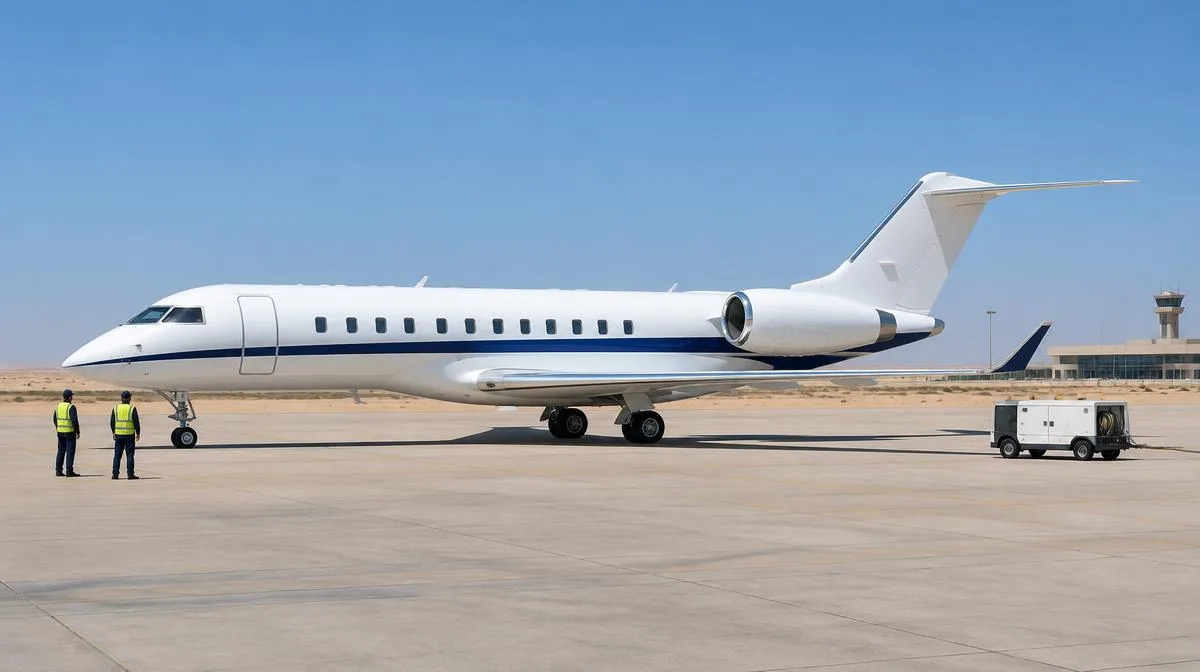
Representative aviation illustration; not a photograph of event operations, LFS facilities or personnel.
Tournament dates: plan against the latest AFC announcement
The AFC announced on 3 November 2026 that the tournament originally scheduled for 7 January–5 February 2027 is being rescheduled to 23 December 2027–21 January 2028, with the new dates to be presented to FIFA for approval. Treat that approval status as material to the flight plan. Do not commit aircraft, non-refundable accommodation or long-stay parking on an obsolete January 2027 tournament calendar. The official AFC update is linked below.
Riyadh, Jeddah and Al Khobar were identified in the AFC host-city announcement. Match allocations and the revised competition timetable determine which airport is useful for each travelling group. Request a city-by-city itinerary rather than one Saudi arrival followed by unspecified domestic sectors. Team movements, broadcast staff and sponsors may have different arrival patterns; the support request should explain the actual mission rather than simply naming the tournament.
Choose airports for the match itinerary, not just the country
King Khalid International in Riyadh (OERK / RUH) and King Abdulaziz International in Jeddah (OEJN / JED) are relevant gateways for the named host cities. King Fahd International in Dammam (OEDF / DMM) is a gateway to the Eastern Province for Al Khobar travel. Airport selection still depends on the aircraft, accepted operating category, current arrival procedures and ground destination. A published runway does not establish event parking availability or a particular service provider.
For a multi-city tour, compare separate passenger and aircraft itineraries. A delegation may attend a match and move immediately while the aircraft needs fuel, a new crew or a repositioning stand. Ask for the full handling and parking sequence, including intermediate domestic legs and the eventual international departure. Road transfer estimates should be confirmed against the exact venue, hotel and event-day traffic plan rather than a generic city-centre distance.
Saudi landing permits and overflight planning
Saudi landing permit and overflight permit enquiries should identify the operator, aircraft, route, schedule and flight purpose. GACA requirements and current publications govern the application; private, commercial charter, scheduled and state-related operations should not be described as interchangeable. LFS can review the coordination request and identify the documentation to obtain from the operator. No fixed approval time or guaranteed permission is promised on this page.
Football accreditation, team invitations and passenger visas serve different purposes from aircraft permits. Keep the relevant supporting documents consistent with the submitted flight purpose and manifest. A team charter may need a different application review from a privately operated executive aircraft. If the itinerary includes a technical stop or an overflight without landing, identify it explicitly so the desk does not treat every sector as the same Saudi landing application.
Team charter handling and arrival-day sequencing
A team movement can require more than a VIP passenger transfer. Give the handler realistic baggage volumes, sports equipment dimensions, group transport requirements and passenger mobility needs. Confirm which terminal or processing point will actually be assigned before circulating arrival instructions. LFS does not claim ownership of a Saudi FBO, exclusive airport access or a dedicated event terminal; accepted providers and airport procedures determine the final arrangements.
Coordinate passenger processing, baggage release, vehicle staging and aircraft servicing as one sequence. Coaches may need to collect different groups, and staff travelling separately can create additional manifest or transfer requirements. Equipment that is carried as cargo needs an appropriate customs review, not an assumption that it travels under the passengers’ event accreditation. For departures, allow the operator to plan check-in and loading against the accepted airport movement time.
Parking, fuel and crew across a long tournament stay
A tournament spanning several weeks does not imply an aircraft can occupy the arrival stand throughout. Ask separately for arrival handling, overnight parking, long-stay options and any repositioning requirements. A landing permission does not reserve a stand. If drop-and-go is proposed, confirm the positioning destination, the extra handling charges, crew travel and how the aircraft will return for the passenger departure; otherwise an apparently inexpensive arrival may conceal a costly second itinerary.
For fuel, provide the aircraft type, required quantity, preferred uplift timing and payment arrangement. Confirm the accepted release and service window with the provider rather than assuming a tournament movement receives priority. Crew hotel requests should cover the aircraft’s actual location, transport and rest schedule. The revised December–January event period also crosses year-end travel demand, so quote validity and hotel cancellation conditions deserve explicit review.
Changing match schedules and multi-aircraft control
Competition results can change where a team or delegation needs to travel next. Separate confirmed sectors from contingent movements and identify the latest decision point for each. Ask how a new destination affects permits, slots, handling and ground transport. An aircraft that has acceptance in Riyadh is not automatically cleared for an unplanned Jeddah arrival, and a revised passenger programme should not be passed to transport suppliers without notifying the flight-support desk.
For multiple aircraft, send a fleet schedule with a registration against each movement, a responsible dispatcher and clear contact details. Keep team, sponsor and executive flights distinct so manifests, permits and invoices do not become mixed. LFS can review the supporting coordination scope, while each operating company remains responsible for flight release, airworthiness and crew legality. The event organiser remains the source for match scheduling and event access.
What LFS coordinates and what remains with the operator
LFS reviews the requested itinerary and coordinates flight planning, permit enquiries, airport handling, fuel arrangements and crew logistics with the relevant parties. The operating company retains operational control, dispatch responsibility and the final go/no-go decision. Airports allocate capacity, authorities issue permissions and licensed providers deliver the services they accept. Event attendance is not an operating authorisation, and an enquiry is not a confirmed booking.
Ask for a written trip summary identifying confirmed services, pending applications, outstanding documents and commercial conditions. Keep the current version available to the flight department and crew, especially when passenger plans change independently of the aircraft schedule. LFS is an independent flight-support coordinator, not an official event organiser, ticket agent or event-appointed aviation provider. No affiliation with the event or guaranteed access is implied.
Send a complete flight-support enquiry
Aircraft, schedule and service requirements
Use the existing LFS flight-support request form. Include the operator name, aircraft registration and type, route, arrival and departure dates, UTC times, passenger and crew numbers, and the purpose of the movement. Identify every sector, including positioning flights, and distinguish a firm schedule from a provisional option. For unusual aircraft, give dimensions and handling requirements rather than relying on the model name alone.
Select the required services for each leg: permits, flight dispatch, ground handling, fuel, slots and parking, crew accommodation, passenger transport or catering. Add any special constraints in the remarks, such as restricted ground access, equipment shipments, a minimum departure fuel quantity or a non-negotiable passenger collection time. Do not place sensitive passport information in general enquiries unless it is needed and requested through the approved process.
Confirm scope before committing the aircraft
A useful response should distinguish an indicative quotation from a confirmed airport acceptance. Ask which items depend on external approval, what documents remain outstanding, how schedule changes are handled and which cancellation or overtime charges apply. Check that fuel, parking, repositioning and ground transfers cover the same itinerary. Keep authority permissions, airport acceptance and handler confirmation as separate references; none automatically substitutes for another.
When you revise the trip, quote the existing LFS trip reference and list the affected sectors. A changed registration, arrival airport, departure time or passenger purpose may require more than a simple remark on the original request. The operations desk can review the consequences, but the aircraft should not depart on an assumption that pending services will be accepted after arrival.
Frequently asked operational questions
Have the original January 2027 Asian Cup dates changed?
Yes. The AFC announced revised dates of 23 December 2027–21 January 2028, to be presented to FIFA for approval. Recheck the official announcement before committing the flight schedule.
Which airports should we consider for the host cities?
Riyadh OERK/RUH and Jeddah OEJN/JED serve those host cities; Dammam OEDF/DMM is relevant for Eastern Province travel to Al Khobar. Suitability and availability require confirmation for your aircraft and itinerary.
Does event accreditation replace a Saudi landing permit?
No. Event accreditation, passenger entry documents and aircraft permissions are separate. Send the actual flight purpose and supporting operator documents for a GACA requirements review.
Can LFS coordinate a team charter itinerary?
You can request coordination of permits, handling, fuel, parking and ground logistics for a team movement. State baggage, equipment and transport needs; acceptance is confirmed with the responsible parties.
Is parking guaranteed for the whole tournament?
No. Request long-stay parking separately. If only a short stop is accepted, review positioning flights, crew accommodation and the return movement before confirming passenger arrangements.
What if our next match destination changes?
Quote your trip reference and provide the revised destination and UTC times. Permits, airport acceptance and supplier arrangements may need amendment rather than carrying over automatically.
Is LFS an official AFC transport partner?
No official event appointment is claimed. LFS provides independent flight-support coordination enquiries, not tournament tickets, accreditation or guaranteed venue access.
Event and operational references
Reviewed 11 November 2026. Organiser schedules may change. Current AIPs, NOTAMs, authority decisions and written airport and provider acceptance govern the flight.
Send your event flight requirements
Provide your operator, aircraft, route, UTC schedule and required services through the existing LFS enquiry process. Include the event name and distinguish confirmed sectors from provisional plans.
Request Flight Support