
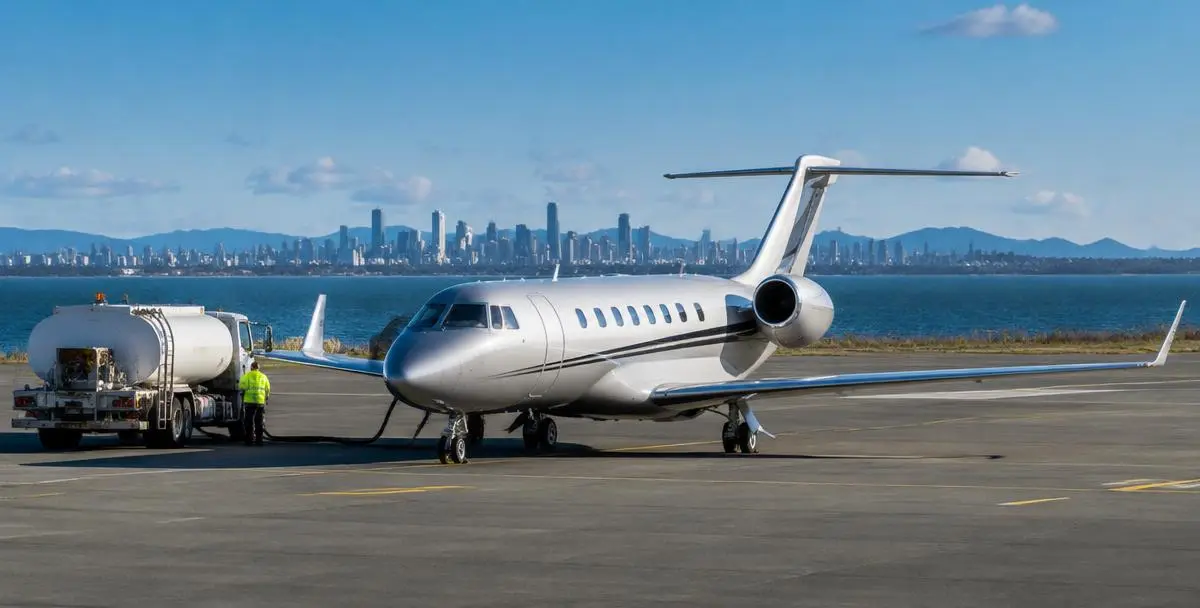
Representative aviation illustration; not a photograph of event operations, LFS facilities or personnel.
A six-week tournament across seven host cities
World Rugby lists the men’s tournament for 1 October–13 November 2027. Its host-city announcement names Adelaide, Brisbane, Melbourne, Newcastle, Perth, Sydney and Townsville. Those cities span a large operating area, making this a multi-sector planning task rather than a single arrival booking. The official match schedule should determine the passenger itinerary, while the operator checks which movements are operationally and commercially feasible.
For teams and corporate groups, distinguish fixed pool matches from contingent later-round travel. A group following a team may not know its next destination until a result is settled. Put that uncertainty in the enquiry instead of presenting every sector as confirmed. LFS does not sell match tickets, promise team access or claim official World Rugby provider status; its role here is independent aircraft trip-support coordination.
International gateways and domestic sector planning
Relevant gateways include Sydney (YSSY / SYD), Melbourne (YMML / MEL), Brisbane (YBBN / BNE), Perth (YPPH / PER) and Adelaide (YPAD / ADL). Newcastle and Townsville require their own suitability and operating review against the particular itinerary. Do not infer that a tournament host city offers the same aircraft processing, parking or service capacity as another. Confirm the destination airport, not just the city name.
An international arrival and a domestic onward flight have different passenger and aircraft handling needs. Plan border processing at the accepted gateway and identify the subsequent sectors individually. A technically suitable runway does not establish approval for a foreign-operated commercial movement or permission to carry passengers domestically. Airport choice should consider accepted operating category, crew plan, current movement constraints and practical ground access to the match venue.
Foreign charter permissions are not interchangeable with private operations
For a foreign commercial operator, ask for a review of applicable Australian operating permissions under current CASA requirements and any other relevant approvals. Private flights, commercial charters, scheduled services and state-related operations must be described accurately. Supply the aircraft, operating company, flight purpose and proposed sectors so the desk can distinguish an international visit from domestic passenger carriage or a series of charter movements.
Do not assume that an international arrival approval automatically allows revenue passengers to be transported between Australian cities. The operator should confirm its legal scope before offering a match-following itinerary. LFS can coordinate the enquiry and documentation requests, but it cannot grant an operating permission or waive cabotage rules. If the commercial plan changes after the original application, review the permission consequences before confirming the new sector.
Border processing, sports equipment and biosecurity planning
An arriving sports delegation may travel with substantial equipment, catering items or personal supplies. Australian border and biosecurity requirements must be reviewed against what is actually carried. Ask the operator and team manager for a practical equipment inventory and identify material that needs specialist advice or declarations. Event accreditation does not replace passenger entry eligibility, customs processing or biosecurity obligations at the international arrival airport.
Give the handler passenger and baggage numbers, mobility needs and the planned onward connection. A tight domestic departure should leave a realistic margin for international processing and aircraft servicing rather than assume a team group will bypass formalities. LFS does not provide legal immigration advice or guarantee expedited clearance. The relevant authorities and the accepted handler determine the actual process and what supporting information is required.
Slots, parking and long-distance aircraft positioning
Review movement availability and parking for each destination. A confirmed arrival does not establish a long-stay stand, and an aircraft may need to reposition while passengers remain in the host city. For Sydney in particular, check current airport operating restrictions and slot conditions rather than copying another airport’s assumptions. No 2027 tournament waiver, priority slot or exclusive parking allocation is claimed here.
Aircraft positioning can become a substantial part of an Australian itinerary. A return sector across the country affects fuel, crew hours and the passenger collection schedule. Ask for a complete cost comparison between parking locally, repositioning and releasing the aircraft for another mission. If a passenger itinerary changes after a match, the aircraft may be far from the new departure city. Include that decision risk in the original plan and assign someone to approve changes.
Time zones, crew rest and tournament-driven changes
Use UTC for aircraft movement requests and add local passenger times separately. Australia’s time zones and daylight-saving arrangements are not uniform across all host cities, so a match schedule expressed locally should not be transferred unchanged into the flight plan. The operating company must reconcile event timing with crew duty, rest and aircraft availability. LFS can coordinate accommodation enquiries and transport, not waive the operator’s flight-time limitations.
For a multi-week tour, define who monitors schedule changes and which passenger decisions trigger a new aviation review. Keep fuel, handling, parking and hotel confirmations against the correct sector and registration. Relief-crew travel may need to be booked independently of the aircraft’s passenger mission. When knock-out results change the destination, quote the trip reference and identify the revised sectors; do not rely on a previous airport acceptance for an entirely new city.
What LFS coordinates and what remains with the operator
LFS reviews the requested itinerary and coordinates flight planning, permit enquiries, airport handling, fuel arrangements and crew logistics with the relevant parties. The operating company retains operational control, dispatch responsibility and the final go/no-go decision. Airports allocate capacity, authorities issue permissions and licensed providers deliver the services they accept. Event attendance is not an operating authorisation, and an enquiry is not a confirmed booking.
Ask for a written trip summary identifying confirmed services, pending applications, outstanding documents and commercial conditions. Keep the current version available to the flight department and crew, especially when passenger plans change independently of the aircraft schedule. LFS is an independent flight-support coordinator, not an official event organiser, ticket agent or event-appointed aviation provider. No affiliation with the event or guaranteed access is implied.
Send a complete flight-support enquiry
Aircraft, schedule and service requirements
Use the existing LFS flight-support request form. Include the operator name, aircraft registration and type, route, arrival and departure dates, UTC times, passenger and crew numbers, and the purpose of the movement. Identify every sector, including positioning flights, and distinguish a firm schedule from a provisional option. For unusual aircraft, give dimensions and handling requirements rather than relying on the model name alone.
Select the required services for each leg: permits, flight dispatch, ground handling, fuel, slots and parking, crew accommodation, passenger transport or catering. Add any special constraints in the remarks, such as restricted ground access, equipment shipments, a minimum departure fuel quantity or a non-negotiable passenger collection time. Do not place sensitive passport information in general enquiries unless it is needed and requested through the approved process.
Confirm scope before committing the aircraft
A useful response should distinguish an indicative quotation from a confirmed airport acceptance. Ask which items depend on external approval, what documents remain outstanding, how schedule changes are handled and which cancellation or overtime charges apply. Check that fuel, parking, repositioning and ground transfers cover the same itinerary. Keep authority permissions, airport acceptance and handler confirmation as separate references; none automatically substitutes for another.
When you revise the trip, quote the existing LFS trip reference and list the affected sectors. A changed registration, arrival airport, departure time or passenger purpose may require more than a simple remark on the original request. The operations desk can review the consequences, but the aircraft should not depart on an assumption that pending services will be accepted after arrival.
Frequently asked operational questions
What are the Australia 2027 tournament dates?
World Rugby lists 1 October–13 November 2027 for the men’s tournament. Consult the official match schedule for individual city and fixture plans.
Which cities are hosting matches?
World Rugby names Adelaide, Brisbane, Melbourne, Newcastle, Perth, Sydney and Townsville. Select the actual arrival airports against aircraft suitability and accepted operating requirements.
Can a foreign charter automatically fly passengers domestically?
No such entitlement should be assumed. The operator must confirm applicable Australian operating permissions and any cabotage restrictions for the proposed domestic sectors.
Do team credentials replace border or biosecurity requirements?
No. Passenger entry, customs and biosecurity rules remain separate. Identify equipment and supplies in the enquiry and seek current authority guidance where needed.
Should flight requests use local time or UTC?
Use UTC for aircraft movements and label passenger programme times separately. Confirm the local time zone and daylight-saving position for each host city.
Is tournament parking guaranteed at every gateway?
No. Movement acceptance and parking require separate confirmation. A positioning plan may be needed, with additional flight, crew and ground-service costs.
Can LFS help with a changing match itinerary?
Request an independent trip-support review and mark contingent sectors clearly. Revisions may affect permissions, handling, parking, crew plans and supplier terms; acceptance is not automatic.
Event and operational references
Reviewed 11 November 2026. Organiser schedules may change. Current AIPs, NOTAMs, authority decisions and written airport and provider acceptance govern the flight.
Send your event flight requirements
Provide your operator, aircraft, route, UTC schedule and required services through the existing LFS enquiry process. Include the event name and distinguish confirmed sectors from provisional plans.
Request Flight Support