
Helicopter trips are not small fixed-wing trips
A helicopter trip that looks simple on a map — city heliport to a coastal resort, or an airport shuttle for a principal — crosses a web of local rules that fixed-wing operators rarely meet. Helipads and heliports are often privately operated with their own prior-permission requirements. Many cities restrict rotorcraft overflight or confine it to published corridors. Noise curfews, single-engine restrictions over built-up areas and local authority approvals can all shape what is actually possible.
LFS plans helicopter movements with those constraints in view from the start. The desk confirms the landing site's status and permission process, checks the route against local rotorcraft rules, and coordinates the ground side — fuel, handling, passenger transfer — so the helicopter is expected at both ends. The operator keeps full operational control; the desk makes sure the permissions and services are in place before rotors turn.
Landing permissions at heliports, helipads and airports
Landing at an airport is the familiar case: a slot or PPR where required, a handler, and parking on the general aviation apron. Landing at a private helipad, a hotel rooftop or a hospital helipad is a different process — permission from the site operator, confirmation of the pad's dimensions, weight limits and approach paths, and sometimes a local authority notification. Some sites accept only certain types or require a site survey before the first visit.
The desk identifies what each landing site requires and runs the permission process in parallel with the rest of the trip. Where a site cannot accept the planned aircraft — weight, dimensions, or a restriction on the time of day — that is flagged early with the realistic alternates: a nearby airport with a fast transfer, or a different pad that can take the type. For airport arrivals, helicopter handling is arranged through the same ground handling coordination used for fixed-wing movements.
Cross-border helicopter operations and permits
International helicopter flights face the same permit framework as fixed-wing aircraft — overflight and landing permits, customs and immigration, and in some regions additional security clearances — but with complications of their own. Helicopter range means more stops, and each stop is a potential permit and fuel question. Some states route rotorcraft through specific border-crossing points; some low-level corridors require separate approval; and a permit filed for a fixed-wing routing may not match how a helicopter actually flies the leg.
LFS files overflight and landing permits for helicopter movements through the same permits desk used for fixed-wing trips, with routings and altitudes that reflect how the helicopter will actually operate. Border-crossing points, fuel stops and customs positions are planned as one chain, so the aircraft is not refuelled at a field where customs is unavailable or held at a border point that does not handle rotorcraft.
Fuel, range and the realities of rotary logistics
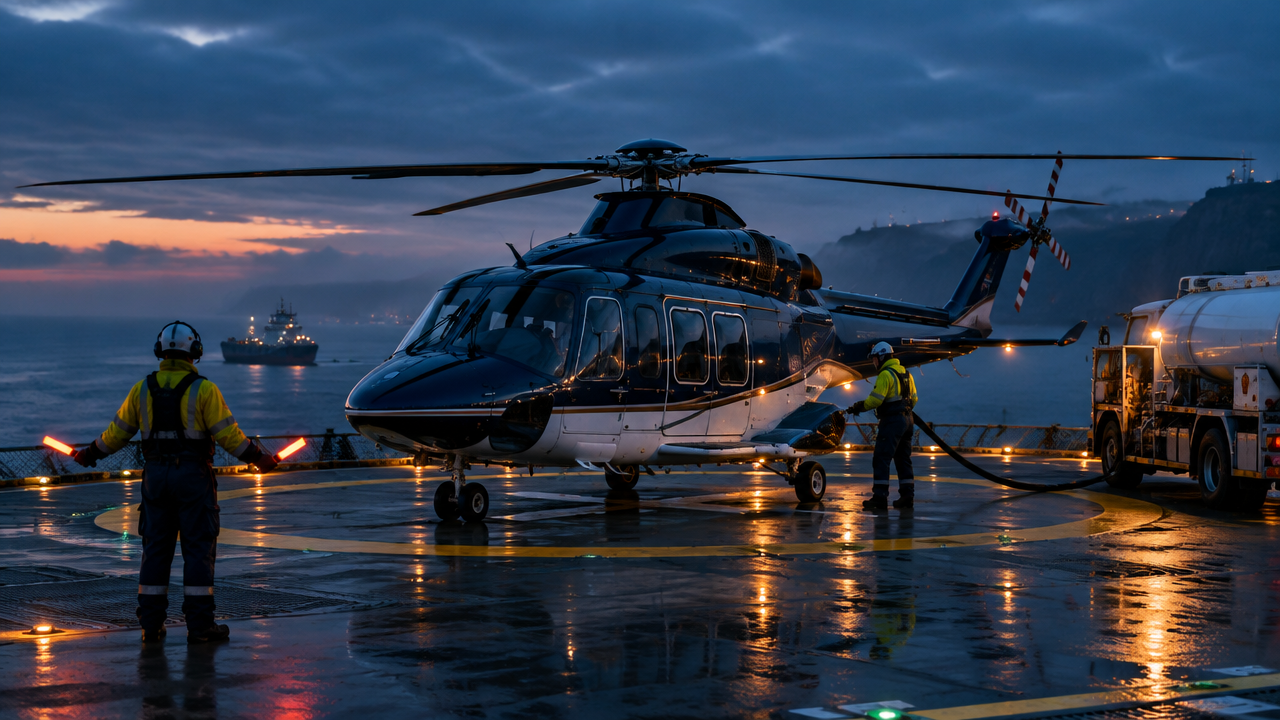
Helicopter fuel planning is unforgiving: shorter legs, higher consumption per mile, and fewer refuelling options than fixed-wing aircraft enjoy. Not every airport stocks Jet A-1 with a bowser that can reach a helipad, not every helipad permits refuelling with passengers on board, and hot-and-high conditions cut payload sharply. A fuel stop that works on paper can fail because the bowser cannot reach the pad or the field has no fuel at the required hour.
The desk confirms fuel availability and uplift at each planned stop before the schedule is committed — including the practical questions of how the fuel gets to the aircraft and at what hours. Where a leg is marginal, the plan is rebuilt around a stop that genuinely works rather than stretching the aircraft. For multi-day programmes, fuel can be pre-positioned or confirmed at each overnight stop so the morning departure is not waiting on a bowser.
VIP shuttles, events and multi-leg programmes
A large share of corporate helicopter work is shuttle flying: airport to city heliport, hotel to event site, repeated legs across a day or a week. These programmes live or die on timing discipline — the helicopter has to be fuelled, permitted and positioned so the principal never waits, and the ground transport at each end has to meet a rotorcraft schedule, not an airline one.
LFS coordinates multi-leg helicopter programmes as a single operation: permissions for every landing site in the rotation, fuel arranged at the right stops, standby plans for weather that fixed-wing passengers would never notice, and crew duty tracked across the flying day. For events, the desk works the event's own aviation coordination process where one exists, and books slots and parking the moment the event window opens.
What to send with a helicopter support request
The fastest requests include the helicopter type and registration, the planned landing sites (or the destinations, if sites are not yet chosen), dates and times, passenger numbers, and whether the operation is single-pilot or dual-crew. If the trip crosses a border, the nationalities on board matter for the customs and immigration position. If any landing site is a private pad, say who operates it — the desk will take the permission process from there.
Send the programme through the LFS request form and the desk will confirm what each landing site requires, what permits the route needs, and where the workable fuel stops are. Where a planned site cannot accept the aircraft, you will get the alternates with the transfer times stated plainly.
Weather, alternates and the helicopter go/no-go picture
Helicopters live closer to the weather than fixed-wing aircraft: lower cruising altitudes, more exposure to icing and convective cloud, and landing sites without instrument approaches. A marginal day that a business jet would fly through can stop a helicopter programme entirely — or worse, tempt it onward. The desk's role is not to make weather decisions; that belongs to the pilot in command. It is to make sure the decision is made with the full picture and that a workable Plan B exists before it is needed.
In practice that means the brief for a helicopter programme includes the weather picture in operational terms, the alternates that genuinely work for a rotorcraft — not every airport with a runway is a useful helicopter alternate — and the ground-transport fallback when the weather wins. For VIP programmes, the desk agrees the decision points with the operator in advance: at what forecast does the helicopter leg become a car leg, and who calls it. Programmes that plan the bad-weather day in advance are the ones that survive it without drama.
Operational planning questions
Can LFS arrange landing permission at private helipads?
Yes. The desk contacts the site operator, confirms the pad's limits and any survey or approval process, and coordinates the permission alongside the rest of the trip. Some sites cannot accept every type — that is flagged before the schedule is committed.
Do helicopters need overflight and landing permits?
For international operations, generally yes — the same permit framework applies as for fixed-wing aircraft, with some states adding rotorcraft-specific routing or border-crossing requirements. LFS files these through its permits desk.
Can a helicopter be handled at a normal airport?
Yes. Helicopters use airport general aviation aprons and handlers routinely. The desk arranges handling, parking and fuel at the airport exactly as for a fixed-wing movement, with any rotorcraft-specific requirements noted to the handler.
How are fuel stops planned for longer helicopter trips?
Leg by leg, against confirmed fuel availability and realistic payload in the expected conditions. The desk confirms uplift at each stop in advance and rebuilds the routing around stops that genuinely work rather than stretching range.
Can LFS support a multi-day helicopter shuttle programme?
Yes. Multi-leg programmes are coordinated as one operation: permissions for every site in the rotation, fuel pre-arranged, weather alternates planned and crew duty tracked across the programme.
Who is responsible for the flight itself?
The operator and the pilot in command, always. LFS coordinates permissions, services and logistics on the ground; it does not operate or direct the aircraft.
Operational references
Reviewed 23 October 2026. Current AIPs, NOTAMs, authority decisions and written provider acceptance govern the actual flight.
Send your operational requirements
Provide your route, aircraft details, UTC schedule and required services. LFS will review the request and confirm the proposed coordination scope, documentation and commercial terms. Acceptance remains with the relevant authority, airport and service provider.
Request a Quote