
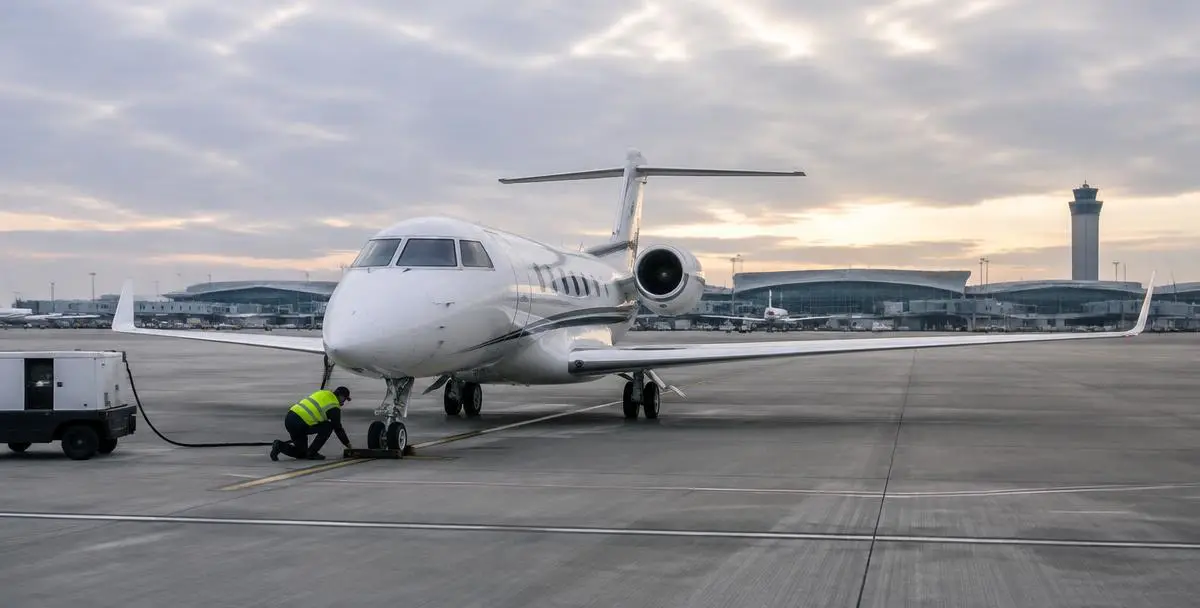
Representative aviation illustration; not a photograph of event operations, LFS facilities or personnel.
Race weekend dates and the Asia-Pacific swing
Formula 1 and Suzuka Circuit list the 2027 Japanese Grand Prix for 9–11 April 2027, with Sprint Qualifying and practice on Friday, the Sprint and qualifying on Saturday and the race on Sunday. Session times are published by the organisers; this page does not set them. The race sits between Australia on 2–4 April and China on 16–18 April.
That sequence matters for aircraft planning. Some operators fly Melbourne–Japan–Shanghai as one itinerary; others position home in between. Each pattern changes permits, parking duration, crew duty and hotel needs, so tell the operations desk which you expect.
Airports for Suzuka
Suzuka is in Mie Prefecture. Chubu Centrair International Airport (RJGG / NGO), on an island off Tokoname, is the main international gateway for the Nagoya region, and other airports in central and western Japan may be considered depending on the itinerary. Which airport suits a flight depends on accepted slots, parking, customs and immigration arrangements, and the passengers’ onward transfer. LFS does not claim a terminal, FBO or reserved capacity at any Japanese airport.
Road transfers to the circuit on race days can be much slower than on a normal weekday. Confirm timings with the ground-transport provider for the session your passengers need to reach, and consider whether a hotel near the circuit or in Nagoya fits the programme better.
Japanese permits for non-scheduled flights
Foreign-registered aircraft operating non-scheduled flights to Japan generally require prior permission from the Japan Civil Aviation Bureau, with documentation that depends on whether the flight is private or commercial. Requests usually need the operator, aircraft registration and type, route, UTC schedule, purpose of flight and supporting aircraft and insurance documents. Submit complete information early; incomplete applications are a common cause of delay.
LFS coordinates the application and tracks references, but it cannot promise a fixed lead time or guarantee approval. Overflight of other states on the route to Japan may need separate permissions; list every FIR and technical stop.
Slots, parking and ground handling
A permission to operate does not reserve an airport slot or a parking stand. Request arrival, departure and the parking period explicitly, and ask whether parking is limited on race weekend. If the aircraft drops passengers and repositions, each extra sector needs its own planning.
Brief the handler on passenger numbers, VIP requirements, baggage and any team equipment. Motorsport equipment, spares or branded material may need customs review as cargo; do not assume event accreditation covers goods. Confirm processing arrangements before circulating instructions to guests.
Fuel, crew and language
Provide fuel quantities, uplift timing and payment arrangements so the fuel provider can confirm a release. Crew hotels should be close to the aircraft’s actual airport, with transport that respects rest requirements. Hotel demand around the race weekend can be high.
Operational communication with Japanese providers is generally efficient, but precise written requests reduce misunderstanding. Send schedules in UTC and local time, spell names exactly as on passports, and keep one channel for changes.
Managing changes on race weekend
Passengers may want to leave after the Sprint or stay for an extra meeting. Separate firm and contingent movements in the enquiry and identify decision deadlines. A changed registration, airport or departure time may require amended permissions and slots rather than a note on an existing reference.
If the aircraft continues to China, Chinese permits, slots and handling are separate and should be planned as part of the same sequence.
A practical planning timeline
Early in the year, decide whether the aircraft will stay in Asia for several races. Share a draft itinerary with LFS so the Japanese permission, slots and parking can be identified. In the final weeks, confirm manifests, fuel and transport, and resubmit any changes.
These are planning suggestions, not authority deadlines. Actual submission windows depend on current Japanese requirements and the airport’s procedures.
Who typically needs Suzuka race-week flight support
Demand comes from several groups with different needs. Corporate hospitality guests often fly in for the weekend on business jets and expect short ground times. Team partners, manufacturers and technical suppliers may need earlier arrivals with equipment. Media crews can use scheduled flights but sometimes require charter connections for late changes. Describing which group the flight serves helps the operations desk anticipate the right permission category and handling level.
Operators flying long sectors from Europe, the Middle East or North America should also plan technical stops and crew changes. Routes across Central Asia, the Russian or Chinese FIRs, or the North Pacific each have their own overflight requirements and contingency considerations. List the intended routing and alternates so LFS can identify every permission needed and flag any sector where availability of fuel or handling should be confirmed in advance.
How to send a useful enquiry to LFS
Use the existing LFS flight-support request form and name the Japanese Grand Prix 2027 in the remarks. Give the operator, aircraft type and registration, every sector including positioning legs, UTC arrival and departure times, passenger and crew numbers and the purpose of flight. Mark which sectors are confirmed and which are provisional, because permits, slots and handling are reviewed against the schedule you actually intend to fly.
Select the services required on each leg: permits, flight planning and dispatch, ground handling, fuel, parking, crew hotels, passenger transport or catering. A useful reply separates an indicative quotation from accepted authority, airport and provider references. If plans change, quote the existing LFS trip reference and list the affected sectors so the operations desk can review the consequences before the aircraft departs.
Frequently asked operational questions
When is the Japanese Grand Prix 2027?
Formula 1 and Suzuka Circuit list the race for 9–11 April 2027, as a Sprint weekend. Recheck the organiser’s timetable before finalising flights.
Which airport is closest to Suzuka for international flights?
Chubu Centrair (RJGG) is the main international gateway for the Nagoya region. Other airports may suit some itineraries; compare slots, parking and transfer times.
Do business jets need permission to fly to Japan?
Foreign-registered aircraft on non-scheduled flights generally need prior permission from the Japan Civil Aviation Bureau. Send the operator, aircraft, route and schedule for review.
Does permission include parking?
No. Request slots and the parking period separately with the airport.
Can the aircraft continue to the Chinese Grand Prix?
Yes, if Chinese permits, slots and handling are also accepted. Plan the sectors as one itinerary.
Can LFS guarantee approval?
No. Permissions, slots and parking are decided by the authorities and airports. LFS coordinates the requests and tracks references.
What should we include in the enquiry?
Operator, aircraft type and registration, all sectors with UTC times, passengers and crew, purpose of flight and the services needed on each leg.
Event and operational references
Reviewed 12 November 2026. Organiser schedules may change. Current AIPs, NOTAMs, authority decisions and written airport and provider acceptance govern the flight.
Send your event flight requirements
Provide your operator, aircraft, route, UTC schedule and required services through the existing LFS enquiry process. Include the event name and distinguish confirmed sectors from provisional plans.