
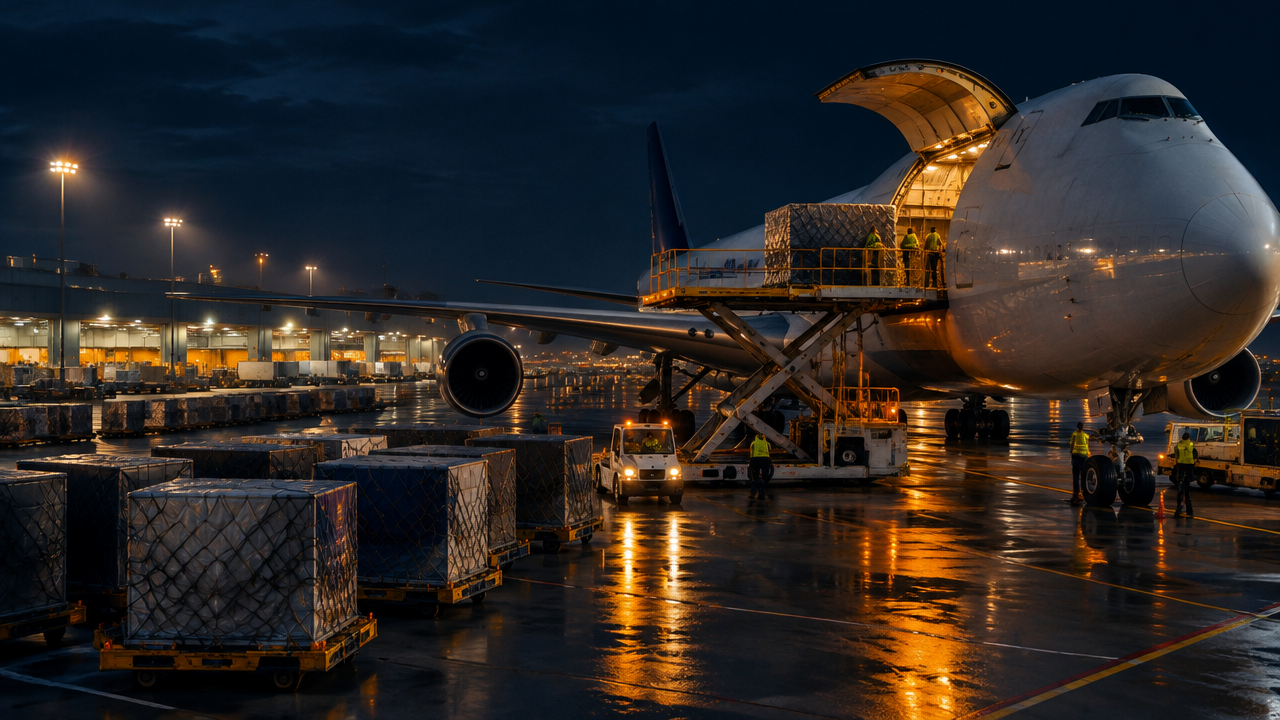
The chain behind every international flight
A single international sector can touch a dozen organisations: the civil aviation authorities of every state overflown and landed in, the slot coordinators, the handlers, the fuel suppliers, the customs and immigration administrations, the caterers, the transport providers. Each works to its own process, its own hours and its own lead times. The operator's problem is not any one of them — it is that the flight only works when all of them work together.
LFS exists to hold that chain. The desk plans the trip as one operation: overflight and landing permits filed in the right order with the right lead times, handling and fuel confirmed at every stop, customs and immigration positions checked before the schedule is committed, and every confirmation held under a single trip reference. When one link moves — a slot change, a permit query, a handler's capacity problem — the rest of the chain is adjusted with it, not left to fail in sequence.
Multi-stop and multi-country itineraries
The complexity compounds with every stop. A five-country business aviation tour is not five trips — it is one trip whose permits, slots, handlers, fuel and crew duty limits all interact. A delay at stop two that pushes the arrival at stop three past its curfew can invalidate the parking, the handler's booking and the crew's legal day in one move. Planning stops independently produces itineraries that break at the first disruption.
The desk plans multi-stop itineraries as a system: realistic block times, buffers where the infrastructure is thin, crew duty planned across the whole tour rather than sector by sector, and alternates identified at each stop before departure. During the tour, flight watch tracks the actual progress against the plan, and downstream stops are re-confirmed as timings firm up — so the handler at stop four is expecting the aircraft when it actually arrives, not when the original schedule said it would.
Cargo, AOG and special movements across borders
Freight adds its own layer to international logistics: customs declarations that differ by state, dangerous goods documentation, special loads with their own handling requirements, and consignees whose readiness determines whether the aircraft turns or sits. An AOG parts movement compresses all of this into hours, where a shipment held at a border means an aircraft on the ground somewhere else.
LFS coordinates cargo charter operations and special movements with the customs position prepared at both ends before the flight departs. Documentation is checked against the receiving state's requirements, the handler at destination is briefed on the load, and the consignee's readiness is confirmed as part of the plan. For special loads — outsize, live animals, humanitarian cargo — the specific requirements are scoped with the operator before commitment, not discovered at the cargo terminal.
Customs, immigration and the border formalities
Border formalities are where international trips most often lose hours. The questions are unglamorous and decisive: is customs available at the planned hour, does the field handle international general aviation at all, what do the passengers' nationalities mean for visas on arrival, can crew enter on a general declaration, and what has to be declared about the aircraft itself. The answers vary by country, by airport and sometimes by time of day.
The desk checks the border position for every stop as part of planning and flags the constraints to the operator before the schedule is fixed: airports where out-of-hours customs is available on request, fields where it is not available at any price, and the documentation each stop requires. Where the planned timing does not work, the itinerary is rebuilt around a field that does — while the change is still cheap.
One desk across time zones
International operations do not respect office hours. A trip crossing eight time zones generates questions at every hour of the operator's night, and the organisations on the chain work to their own local clocks. An operator coordinating alone spends the trip chasing confirmations across time zones; an operator with a 24/7 desk sleeps while the chain is managed.
The LFS duty desk operates 24/7/365 and works the trip in every time zone it touches. Confirmations are chased when the relevant office is open, not when the operator is awake. Disruption is worked as it happens — the diversion at 03:00 local, the permit query from an authority on the far side of the world — and the operator is woken only when a decision is genuinely theirs.
What to send for an international logistics request
The most useful starting point is the shape of the trip: the route or the countries involved, the aircraft, the dates, the payload — passengers, cargo or both — and anything unusual about the operation. For cargo, the commodity and its documentation status matter from the first conversation. For multi-stop tours, the priorities do: which stops are fixed and which can flex.
Send the outline through the LFS request form and the desk will come back with the workable plan: the permits and their lead times, the stops that work and the ones that do not, and the realistic timeline. Where the itinerary as imagined cannot be done, you will hear that early, with the version that can.
Where LFS's regional depth matters most
International logistics is easiest where infrastructure is dense and hardest where it is not. Across the Middle East, the GCC, Africa, Central Asia and the Indian subcontinent — the regions where LFS works daily — the difference between a smooth trip and a stalled one is usually local knowledge: which authority actually decides a permit, which handler at a given field can take a wide-body at night, which airport's customs desk closes for a holiday that appears on no international calendar. These are not facts that live in a database; they are maintained by working the routes.
That depth shows in the advice as much as the execution. The desk will steer an itinerary away from a stop that looks convenient but cannot support the aircraft at the planned hour, and toward the field that genuinely works — sometimes a less obvious airport with a better handler, longer customs hours or a more reliable fuel supply. Operators planning into unfamiliar regions get the benefit of routes the desk has already run, rather than paying tuition on their own aircraft.
Operational planning questions
What does international aviation logistics cover?
Everything the flight needs across borders: overflight and landing permits, slots, handling, fuel, customs and immigration positioning, crew logistics and flight watch — coordinated as one chain under a single trip reference.
Can LFS coordinate a multi-country tour?
Yes. Multi-stop itineraries are planned as a system — permits in the right order, crew duty across the whole tour, buffers where infrastructure is thin, and flight watch re-confirming downstream stops as timings firm up.
Does LFS handle the customs declarations?
The desk prepares and coordinates the customs position at each stop and ensures the documentation matches the receiving state's requirements. The legal declarations themselves remain the operator's and the consignee's responsibility.
Can cargo and passengers be combined on one coordinated trip?
Yes, where the operation allows it. The desk coordinates both sides — passenger formalities and cargo documentation — so neither is an afterthought at the ramp.
Which regions does LFS cover?
LFS coordinates worldwide, with particular depth across the Middle East, GCC, Africa, Central Asia and the Indian subcontinent. Where a destination is outside the desk's direct network, that is stated plainly with the realistic options.
How early should an international trip be sent?
As early as the dates are known — permit lead times vary from hours to weeks by state, and the desk can only compress them so far. Short-notice trips are accepted and worked honestly against what the timeline allows.
Operational references
Reviewed 23 October 2026. Current AIPs, NOTAMs, authority decisions and written provider acceptance govern the actual flight.
Send your operational requirements
Provide your route, aircraft details, UTC schedule and required services. LFS will review the request and confirm the proposed coordination scope, documentation and commercial terms. Acceptance remains with the relevant authority, airport and service provider.
Request a Quote