
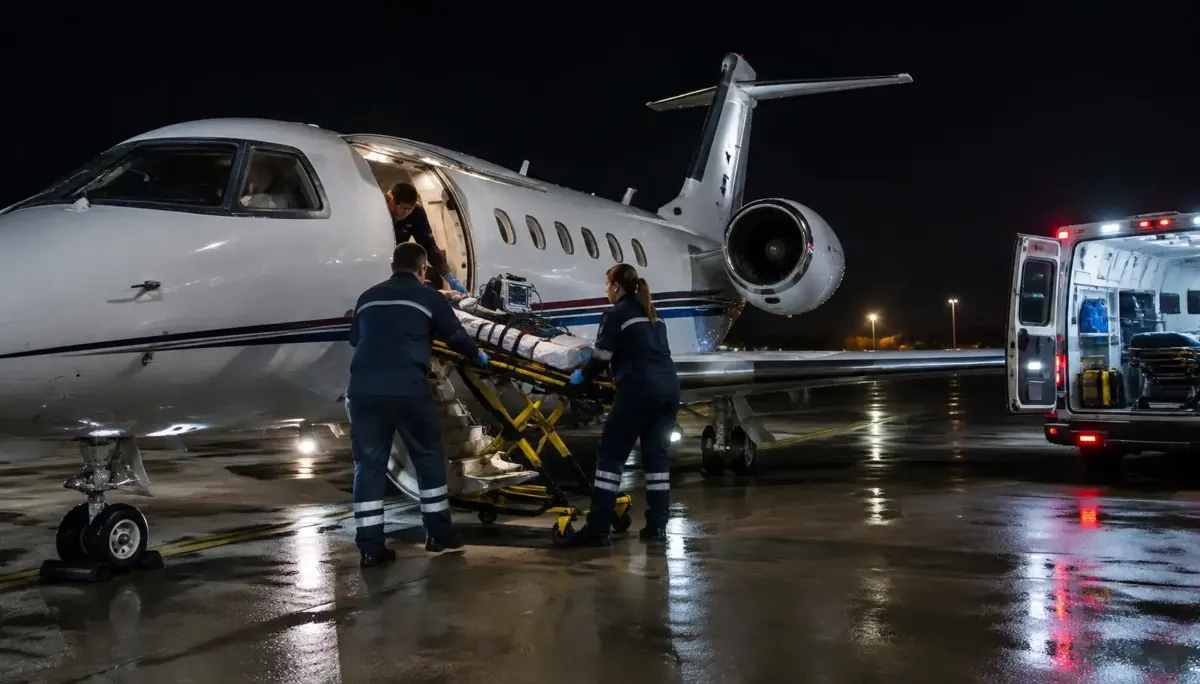
Operational support for medical flights
When a patient needs to be moved by air, the medical team, the aircraft and the receiving hospital are usually arranged by the air ambulance operator or the assistance company. What often slows a mission down is everything around the aircraft: permits for each country on the route, a handler at an unfamiliar airport, fuel at short notice, and permission for a road ambulance to meet the aircraft on the apron.
LFS provides that operational layer. We are a trip support and dispatch company, not a medical provider or an aircraft operator. Our role is to clear the way for your crew so the aircraft can depart, land and turn around with as little delay as possible. We have supported flights from Bahrain since 2012, and medical flights are among the requests we treat with the highest priority.
This page is for air ambulance operators, assistance companies, insurers and charter operators flying medical missions in and through the Middle East.
What we coordinate for medevac flights
Urgent overflight and landing permits
Many civil aviation authorities in the region have procedures for humanitarian and medical flights. We prepare the application with the right flight category and supporting information, submit it and follow up on the authority's decision. See our urgent flight permits page.
Ground handling and airside access
We book a handler at each airport and ask the airport and handler to arrange airside access for the road ambulance where local rules allow it. This lets the transfer between ambulance and aircraft happen as close to the aircraft as possible. Whether ambulance access is permitted depends on each airport's procedures, and we confirm it before the flight.
Fuel and quick turnarounds
We arrange fuel ahead of arrival so the aircraft can refuel while the patient transfer takes place, where the airport and the operator's procedures allow it.
Flight planning and dispatch
Our dispatchers file flight plans and prepare briefing material with NOTAMs and weather, helping your crew plan around restricted airspace and airport hours. More on Gulf flight dispatch services.
Crew rest and hotels
Medical missions often run to the limits of crew duty time. We book hotels and transport near the airport so the crew can rest before the return leg. See crew logistics.
Coordination with the receiving side
We share arrival times and handler contacts with the ambulance provider or the assistance company so everyone on the ground has the same information.
Where we support medical flights
We support medical flights across the Gulf, including Saudi Arabia, the UAE, Qatar, Kuwait, Oman and Bahrain, as well as Jordan, Iraq and other countries in the wider region. Requirements differ by country, so we check the rules for each leg of the route. For country-specific detail, see our pages on Qatar, Kuwait, Jordan and Saudi Arabia.
Some routes pass through airspace that is restricted or affected by conflict. We follow current notices and authority guidance, and we will tell you if a route or airport is not available or needs special approval.
Information we need for a medevac request
Speed matters, so send what you have. The desk will review the operational information and identify anything needed to progress the request.
- Aircraft type, registration and operator, and whether the flight is a dedicated air ambulance or a configured charter aircraft.
- Route, airports and estimated times in UTC.
- Crew details and passport information.
- Number of passengers, including medical staff and escorts.
- Whether a road ambulance needs to meet the aircraft at departure or arrival.
- Aircraft documents, such as registration, airworthiness and insurance certificates and the air operator certificate.
- Any medical equipment that needs special handling, described in general terms.
How a medevac support request works
1. Contact the duty desk
Use the request form or call the 24/7 line. For time-critical missions, calling first is the fastest way to start.
2. Feasibility check
We check permit procedures, airport hours, handling and fuel for each leg and tell you quickly if there is a limitation.
3. Permits and services in parallel
Applications are submitted and services are booked at the same time, where the required information and provider acceptance allow.
4. Mission follow-up
We stay with the flight from departure to the return leg and adjust arrangements as times change.
Patient privacy and discretion
We only ask for the information that authorities and handlers need to process the flight. Medical details stay between your team and the receiving hospital; we do not need a diagnosis to arrange permits and handling. Where an authority asks for more information, we tell you exactly what is required and why.
For broader humanitarian and medical work, see our medical and emergency aviation page and Middle East flight support.
What we do not do
To keep things clear: LFS does not operate aircraft, employ medical crews or provide clinical services. We do not guarantee permit approval times, because the authority makes the final decision. What we offer is fast, careful coordination by a team that is awake when you call and knows the region.
Preparing for medevac missions before they happen
The fastest medevac missions are often the ones prepared in advance. Operators and assistance companies that fly regularly in the region can save valuable time by sharing their standing information with us before an urgent request arrives: aircraft documents, operator certificates, insurance and the usual crew list. When the call comes, we can prepare the permit file without repeating the initial document collection.
It also helps to agree how you want us to work. Some operators want us to start on permits as soon as a mission is likely; others prefer us to wait for final confirmation. Some prefer a single point of contact; others want updates sent to a shared operations mailbox. Setting this out in advance avoids confusion when time is short.
Medical flights are also affected by airport hours and night restrictions. Some regional airports close overnight or need extra notice for operations outside normal hours. We can provide information on the airports you use most often so that your planners know which options are realistic at different times of day.
Finally, keep in mind that conditions in the region can change quickly. Airspace restrictions, NOTAMs and authority procedures may be updated with little notice. Our dispatchers check the current situation for each mission and raise anything that could affect the route before departure.
Repatriation and inter-hospital transfers
Not every medical flight is an emergency evacuation. Many missions are planned repatriations, where a patient who is stable enough to travel is flown home for continued care, or inter-hospital transfers between cities or countries. These flights still need permits, handling and coordination with ground ambulances, but there is usually a little more time to plan.
For planned medical flights, we can line up permits, handling and crew hotels for each leg, and share a single timetable with the operator, the assistance company and the ambulance providers. If the patient's condition changes and the flight needs to move earlier or later, we update the arrangements with the authorities and handlers as quickly as possible.
Confirm an airport-specific service plan
Regional coverage is not a blanket statement that every airport is available for every medical flight. Confirm the actual destination, operator, aircraft and proposed UTC times before accepting a handling or fuel arrangement. Airport hours, security permissions, stand restrictions and current airspace conditions can change the usable plan. For missions involving Iraq or other constrained destinations, verify the requirements for each airport and flight rather than applying one regional assumption.
A complete ground instruction should identify the accepted handler, requested ground power and loading assistance, the ambulance meeting point and the responsible transfer contact. Ambulance access to the apron requires local confirmation. A permit approval does not automatically authorise a road vehicle or medical team to enter the airside area. Where access is unavailable, the operator and clinical providers must agree the alternative transfer arrangement.
Keep schedule changes visible across the mission
A patient-transfer schedule can move after the initial permit and handling requests. Send the revised UTC times and any change to aircraft, route or passenger numbers to the desk together. The effect may extend beyond one booking: permission validity, slots, parking, fuel timing, crew transport and ambulance arrangements all need a consistent version of the plan.
Agree who can authorise amendments and who receives the operational updates. Flight safety and operational control remain with the operator, while clinical decisions remain with the medical provider. LFS supports coordination of the requested aviation services; it cannot declare a patient fit to fly, approve medical equipment or guarantee that a changed itinerary will be accepted by every authority.
Separate the flight-support enquiry from the clinical case
For medical evacuation charter planning, our journal guide explains how aircraft, clinical and trip-support roles fit together. This regional page is for operators and assistance organisations that need the aviation arrangements reviewed. Share necessary operational requirements rather than a full patient record in a general form; agree any required medical-document exchange with the responsible clinical or assistance team.
Managed-fleet departments arranging an occasional medical mission can use aircraft management trip support for the standing-file relationship. For the current mission, specify the services being requested and those already arranged directly. This helps prevent duplicate handler or fuel orders and clarifies which items still depend on availability, authority approval or written confirmation.
Frequently asked questions
Does LFS operate air ambulance aircraft?
No. LFS provides trip support and dispatch for air ambulance operators and assistance companies: permits, handling, fuel, flight planning and crew logistics. The aircraft and medical team are provided by the operator.
How quickly can a medevac permit be obtained?
It depends on the country and the authority's procedures. Many authorities prioritise medical flights, but approval times are never guaranteed. We submit as soon as we have the essential information and follow up continuously.
Can a road ambulance meet the aircraft on the apron?
At many airports this is possible with prior arrangement through the handler and the airport authority. We request it for your flight and confirm whether it is allowed before departure.
Do you support medical flights at night and on weekends?
Yes. Our duty desk works 24/7, every day of the year.
Which countries do you cover?
We support medical flights across the Gulf and the wider Middle East, including Saudi Arabia, the UAE, Qatar, Kuwait, Oman, Bahrain, Jordan and Iraq, subject to current airspace conditions and authority rules.
Do you need the patient's medical details?
Usually not. We only request the information authorities and handlers need. If an authority asks for more, we explain what is needed.
Reference sources
Reviewed 19 October 2026. Current authority requirements, operator procedures and written service confirmations govern each flight.