
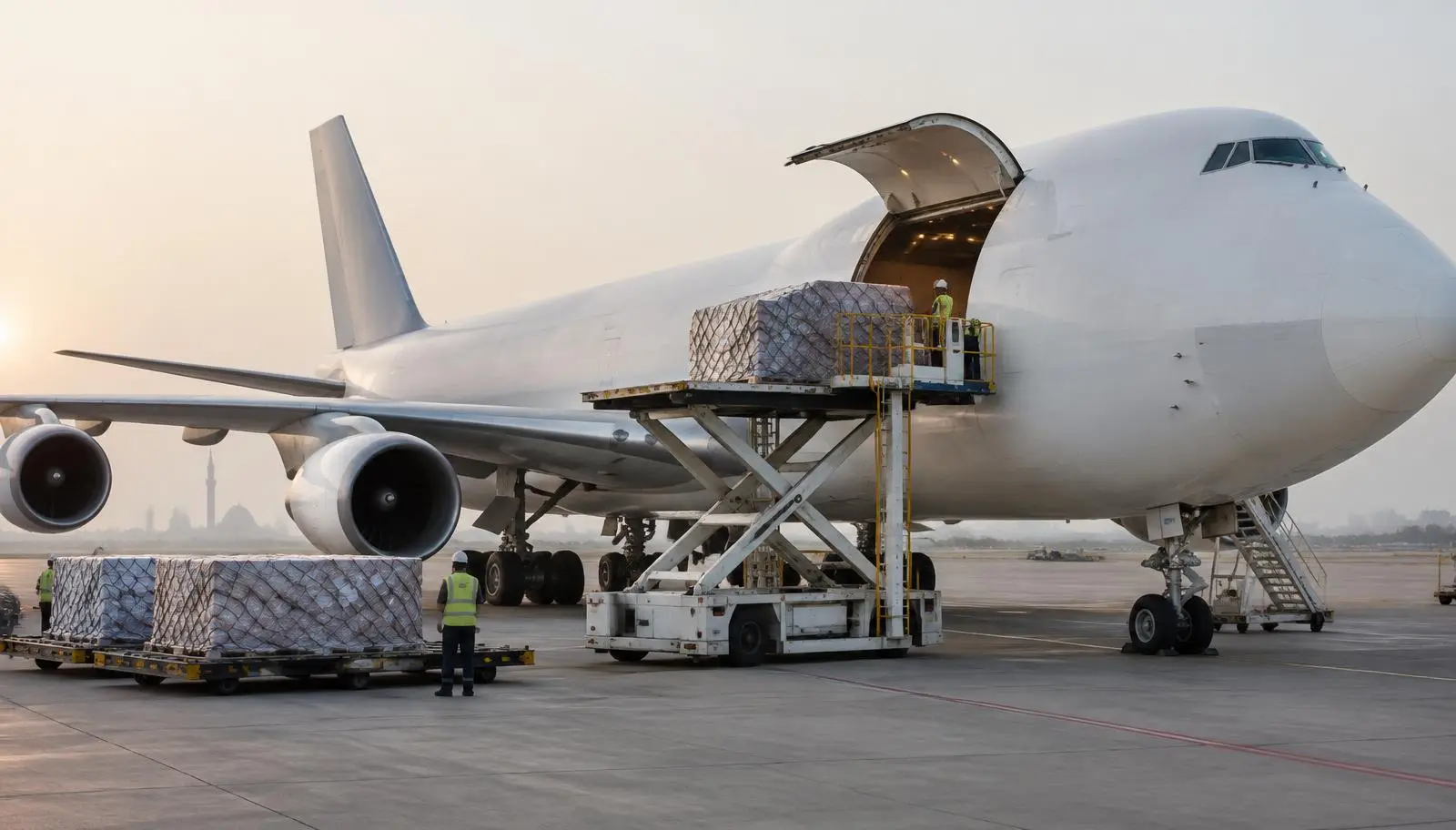
Why cargo handling needs careful coordination
A cargo flight is judged by how quickly and safely it is turned around. That depends on things a passenger flight rarely worries about: a main deck loader that fits the aircraft, enough pallet dollies, a cargo terminal that is open when the aircraft arrives, customs agents ready for the documents, and a ramp position that can accept a wide-body freighter. If one item is missing, the aircraft waits on the ground.
LFS coordinates these arrangements for cargo operators flying into and through the Middle East. We are a trip support company: we book and supervise the local providers, apply for the permits and arrange fuel, and we keep one team responsible for the whole flight. We have supported operators from Bahrain since 2012, including cargo charters, ad hoc freighter flights and ACMI operations.
This page is for freighter operators, cargo charter brokers, ACMI providers and logistics companies that need a reliable ground partner in the region.
What we coordinate for cargo flights
Ramp handling and loading equipment
We book a handler with the equipment your aircraft type needs, such as main deck and lower deck loaders, high loaders, pallet and container dollies, tugs, ground power and air start where required. We confirm the equipment list with the handler before arrival, because availability varies between airports.
Cargo terminal and documentation
We coordinate with the cargo terminal and the shipper or forwarder so that air waybills, manifests and customs documents are ready, and that build-up or break-down of pallets is scheduled around your slot.
Load supervision
Where you need it, we can arrange a supervisor to attend the loading and unloading, check that the load plan is followed and report back to your operations team.
Permits
Cargo and charter flights often need landing and overflight permits in each country, and commercial cargo usually needs extra approvals. We prepare and track the applications. See landing permits and overflight permits.
Fuel and flight planning
We arrange Jet A-1 at each stop, subject to supplier availability, and our dispatchers can file flight plans and prepare briefings. See fuel and flight planning.
Crew hotels and transport
We book crew accommodation and transport, which is especially useful for overnight cargo rotations and crew changes.
Special cargo
Some loads need extra planning and approvals. We help operators prepare for:
- Dangerous goods, which need the correct declarations and, in many countries, a specific authority approval.
- Oversized and heavy loads that need special equipment or a particular ramp position.
- Perishables and pharmaceuticals that need temperature-controlled storage or fast transfer.
- Live animals, which need veterinary and import paperwork.
- Humanitarian and relief cargo, which may follow special authority procedures.
Cargo information on our site
For more background, see cargo charter operations, our ULD specifications guide, live animal transport and cargo and freight aviation.
Requirements for special cargo differ by country and airport. We check them for your specific route and tell you what is needed before you commit to the flight.
Where we arrange cargo handling
We coordinate cargo handling across the Gulf, including Saudi Arabia, the UAE, Qatar, Kuwait, Oman and Bahrain, and at airports in the wider Middle East such as Jordan and Iraq. Main cargo airports in the region have dedicated freighter facilities; smaller airports may have limited equipment for wide-body freighters, so we check before we confirm.
If your flight goes to a destination where airspace or airport access is restricted, we follow current authority notices and tell you clearly when a request is not possible.
What we need for a cargo handling request
- Aircraft type and registration, including the cargo configuration.
- Route, airports and times in UTC.
- Nature of the cargo, weight and number of pieces or ULDs.
- Whether dangerous goods, perishables, live animals or oversized items are on board.
- Shipper, consignee or forwarder contacts at each end.
- Aircraft and operator documents, including the air operator certificate and insurance.
- Services needed: fuel, supervision, crew hotels, transport.
How a cargo handling request works
1. Send your flight details
Use the request form to share your aircraft, route, schedule and cargo information.
2. Feasibility and equipment check
We check equipment, parking, terminal hours and permit requirements at each stop and report any limitations.
3. Bookings and approvals
We book the handler, fuel and other services and submit the permit applications, then send you a single confirmation.
4. Live follow-up
Our duty desk follows the operation, keeps the handler updated on times and deals with changes as they happen.
Common issues on cargo turnarounds
Many cargo delays come from a mismatch between the aircraft and the equipment at the airport. A main deck loader that cannot reach the door sill of a particular freighter, or too few dollies for the number of positions, can add hours to a turnaround. That is why we always confirm the equipment list against your exact aircraft type and configuration.
Documentation is the second common issue. Air waybills that do not match the manifest, missing dangerous goods declarations or late customs clearance can keep cargo in the terminal while the aircraft waits. Early coordination between the shipper, the forwarder, the terminal and the handler reduces that risk, and we help keep everyone working from the same schedule.
Third, cargo terminal hours do not always match the airport's operating hours. A freighter can land at an airport that is open 24 hours, only to find the cargo terminal or customs office runs a reduced shift at night or on weekends. We check this before confirming the slot.
Finally, weight and balance information needs to reach the handler and the load controller in good time. Sending the load plan early, together with any special loading instructions, helps the ramp team prepare the right equipment and staffing for your arrival and keeps the departure on schedule.
ACMI and repeat cargo programmes
Some operators fly the same cargo route several times a week, often under an ACMI or charter programme for an airline or logistics company. For repeat flights, the goal is consistency: the same equipment, the same handling standard and permits that are renewed or extended before they expire.
We support repeat programmes by keeping a file for each route with the agreed services, contacts and documents, and by monitoring permit validity so renewals are submitted in time. If the schedule or aircraft changes during the programme, we update the handler and the authorities and confirm the new arrangements. Regular reporting is available on request, so your operations team can see how each turnaround went.
Whether you need a single ad hoc freighter or a regular programme, we start by understanding the cargo, the aircraft and the timeline, then build a handling plan around them. Tell us what matters most for the shipment, such as speed, temperature, security or cost, and we will set up the turnaround to match, with clear confirmations at each step and one duty desk contact who follows the flight until it is closed.
Frequently asked questions
Do you provide the loading equipment yourselves?+
No. LFS coordinates local handling providers who own and operate the equipment. We confirm the equipment needed for your aircraft type with the handler before the flight.
Can you handle wide-body freighters?+
Yes, at airports with suitable equipment and parking. Facilities vary, so we check each airport for your aircraft type before confirming.
Do you support dangerous goods flights?+
We help operators prepare the documents and apply for the approvals required by each country. Acceptance depends on the authority, the airport and the handler.
Do cargo flights need landing permits in the Gulf?+
In most cases foreign-registered commercial cargo flights need landing and often overflight permits. We check requirements for each country on your route. All permits remain subject to approval by the relevant authority.
Is your desk available around the clock?+
Yes. The LFS duty desk works 24/7, every day of the year.
How do I request cargo handling?+
Send your flight and cargo details through the LFS request form, or email OPS@LFS.AERO.
Ready to plan your cargo flight?
Send your aircraft, route, schedule and cargo details through our request form. Our duty desk will confirm handling, equipment and the permits you need. All permits remain subject to approval by the relevant authority.